
🐜 How We Eliminate Subterranean Termites: Real Trench Treatment Process in Broward County
Subterranean termites are one of the most destructive and costly pests affecting homes in South Florida. Unlike other pests that are easy to detect, these termites operate silently from below the ground, often causing significant structural damage before homeowners notice any warning signs.
🧠 Understanding Subterranean Termites and Why They Are a Serious Threat
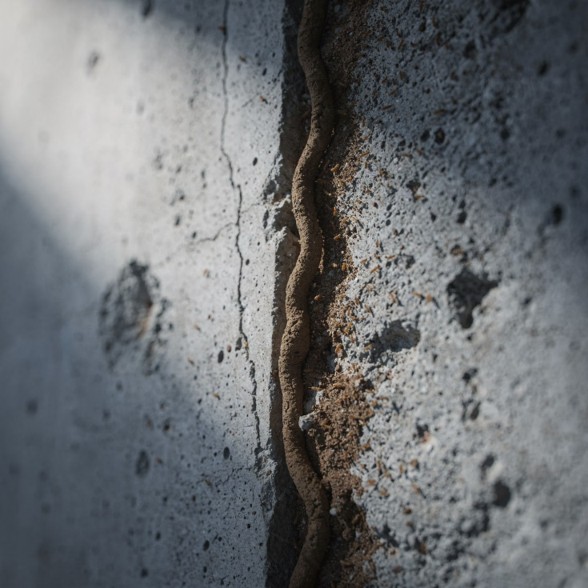
Subterranean termites live underground and build extensive colonies that can contain thousands—or even millions—of individuals. These termites rely on soil moisture to survive, which is why they construct protective mud tubes that allow them to travel safely between their colony and a food source, such as the wooden structure of your home.
One of the biggest challenges with subterranean termites is that they attack from hidden areas. Instead of consuming wood from the outside, they eat it from the inside out, leaving the outer surface intact. This makes the damage difficult to detect until it becomes severe.
In South Florida, subterranean termite activity is especially common due to:
🌡️ Consistently Warm Temperatures
South Florida’s climate provides year-round warmth that termites thrive in, with no cold season to slow colony growth.
🌧️ Frequent Rainfall & High Humidity
Moisture-rich conditions are essential for subterranean termite survival, and Broward County delivers exactly that.
🌱 Soil Conditions
Soil conditions that support colony growth make Broward County a prime environment for termite infestations.
Because these termites originate in the soil, effective treatment must address the problem at its source—not just the visible symptoms.
⚠️ Why Subterranean Termites Often Go Undetected
Many homeowners are surprised to learn they have termites only after significant damage has already occurred. This happens because subterranean termites are considered “stealth pests.”
They remain hidden by:
- Traveling inside walls or foundations
- Using mud tubes to avoid exposure
- Staying underground for most of their lifecycle
In many cases, visible signs appear only after the infestation has been active for months—or even years.
That’s why early detection and preventative treatment are critical, especially in high-risk areas like Broward County.
⚠️ Why DIY Termite Treatments Are Not Effective
It’s common for homeowners to attempt do-it-yourself termite solutions, but subterranean termites require a much more comprehensive approach than surface-level treatments.
❌ Do Not Reach the Colony
Most over-the-counter products do not reach the colony in the soil, leaving the source of the infestation completely untreated.
❌ Only Treat Visible Areas
DIY solutions only treat visible areas, not hidden pathways where termites actually travel and cause damage.
❌ No Continuous Barrier
They fail to create a continuous protective barrier, leaving gaps that termites can easily exploit to re-enter.
❌ Only Temporary Relief
DIY products provide only temporary relief, meaning termites often return—sometimes in greater numbers.
👉 If the soil around your home is not properly treated, the infestation can continue beneath the surface without interruption.
🛠️ What Is a Trench Termite Treatment?
A trench termite treatment is a professional method designed to protect your home by creating a treated zone in the soil around the foundation.
Dig the Trench
Carefully digging a trench along the perimeter of the structure
Apply Treatment
Applying a specialized liquid treatment into the soil
Establish Barrier
Establishing a continuous barrier that helps prevent termites from entering
The goal is not just to eliminate current activity, but to create long-term protection by addressing the pathways termites use to access your home.
📸 Real Trench Treatment in Broward County: Step-by-Step Process
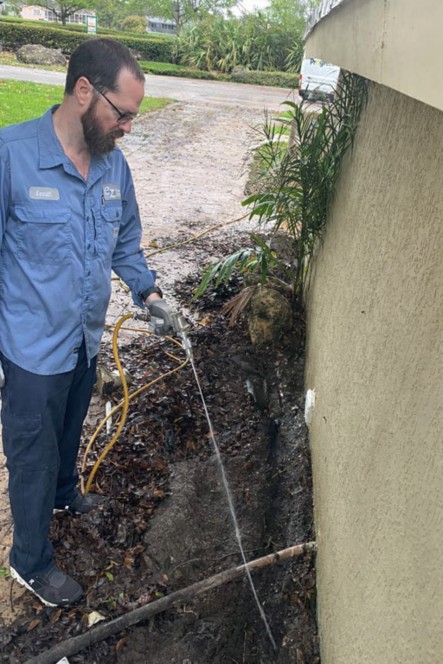
Below is a real example of how our team performs a trench termite treatment on a residential property in Broward County.
Steps 1 & 2: Evaluation, Preparation & Trenching
Property Evaluation and Preparation
Every treatment begins with a careful evaluation of the property. We inspect the perimeter of the home, paying close attention to areas where termites are more likely to enter.
This includes:
- Foundation walls
- Entry points and expansion joints
- Moisture-prone areas
- Landscaping features near the structure
Proper preparation ensures that the treatment is applied effectively and consistently across the entire property.
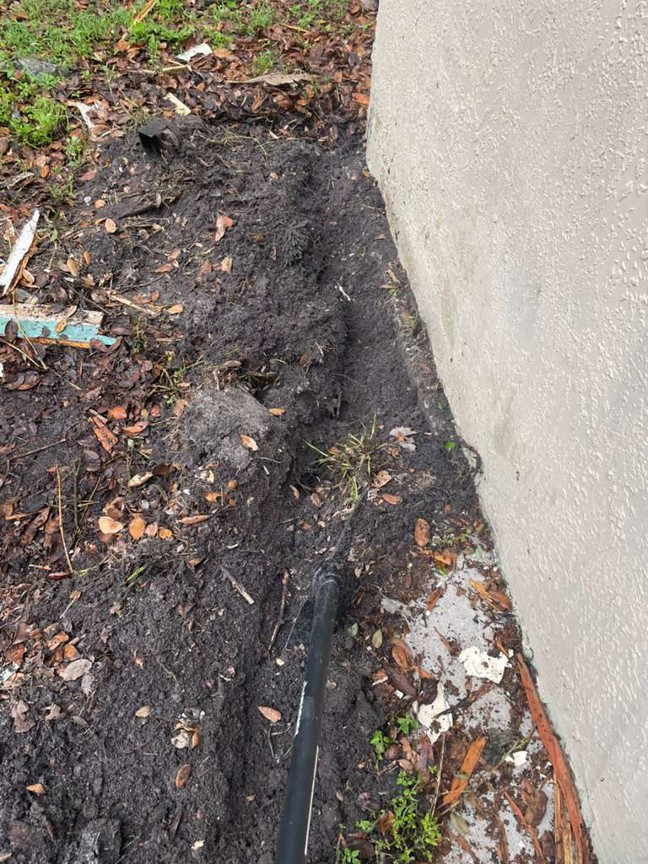
Digging the Trench Along the Foundation
A narrow trench is dug directly along the base of the home’s foundation. This trench allows direct access to the soil where termites live and travel.
The trench must be:
• Continuous around the structure
• Close to the foundation
• Properly spaced and consistent
This step is essential because it creates the pathway for applying the treatment where it is most effective.
Steps 3 & 4: Liquid Treatment Application & Concrete Drilling
Many homeowners try to solve ant problems with store-bought sprays or traps. Unfortunately, these solutions rarely eliminate the root of the problem.
🔹 Step 3: Application of the Liquid Treatment
Once the trench is prepared, a professional-grade liquid treatment is applied into the soil.
This process:
• Saturates the soil along the foundation
• Creates a protective barrier
• Targets termites where they are most active
The application is performed using specialized equipment to ensure even and thorough coverage.
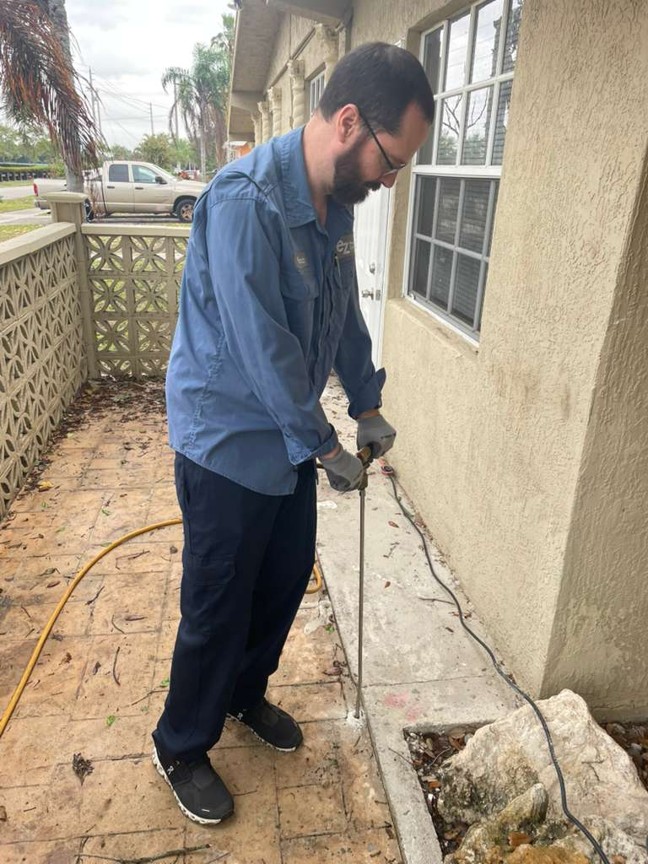
🔹 Step 4: Drilling in Concrete and Hardscape Areas
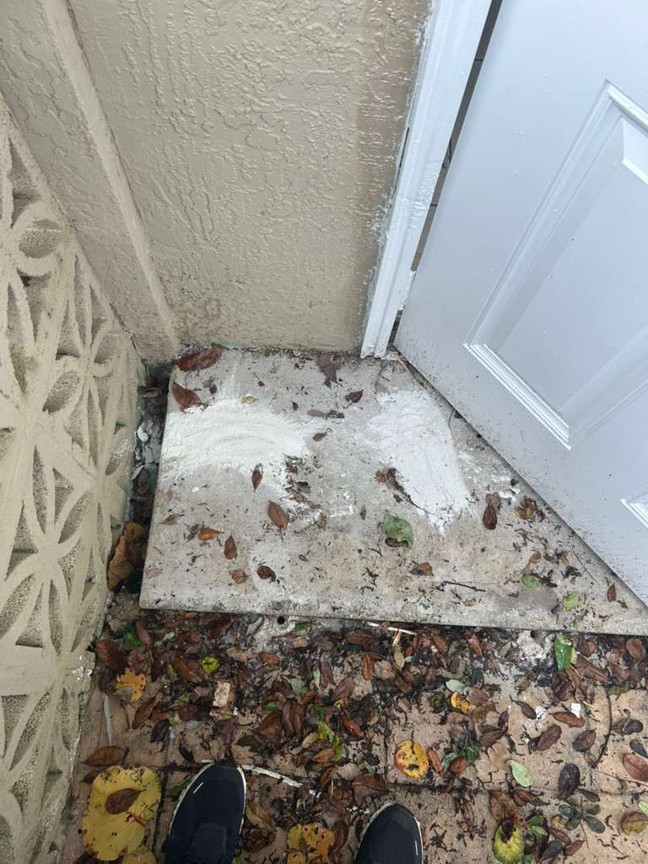
In areas where soil is not accessible—such as patios, driveways, or entryways—small holes are drilled through the concrete.
This allows access beneath the slab, where termites may be traveling unseen.
These areas are especially important because:
• Termites often use slab edges as entry points
• Concrete can hide active termite pathways
Steps 5 & 6: Slab Injection & High-Risk Area Treatment
Injection Beneath Slabs
After drilling, the treatment is injected directly beneath the concrete surface.
This step ensures:
- Complete coverage beneath hard surfaces
- Elimination of hidden termite routes
- Consistency across all treated areas
By combining trenching and injection, the treatment becomes fully comprehensive.
Treating High-Risk Areas
Special attention is given to areas where termites are more likely to enter.
These include:
- Plumbing lines
- Foundation corners
- Areas with higher moisture levels
- Landscaping elements near the structure
Targeting these zones helps strengthen the overall effectiveness of the treatment.
🔹 Step 7: Creating a Continuous Protective Barrier
The final result is a continuous treated zone around the entire home.
Prevents Entry
Helps prevent termites from entering the structure from any direction around the perimeter.
Protects Structure
Protects structural elements of the home from subterranean termite damage.
Long-Term Control
Supports long-term control by maintaining an active treated zone in the soil.
Consistency is key—any untreated gap can allow termites to re-enter.
🧠 Why Trench Treatments Are Effective
Trench termite treatments are widely used because they address the root of the problem.
They work by:
- Targeting termites in the soil
- Interrupting their access to the structure
- Creating a protective zone around the home
- Supporting long-term prevention
Unlike surface treatments, this method provides a more complete and reliable solution.
📍 Why Termite Protection Is Essential in Broward County
Broward County presents ideal conditions for termite activity due to its climate and environment.
Warm Temperatures Throughout the Year
Warm temperatures throughout the year create a non-stop environment for termite colony growth and activity with no seasonal slowdown.
High Humidity and Frequent Rainfall
High humidity and frequent rainfall provide the moisture that subterranean termites need to survive and expand their colonies.
Soil Conditions That Support Termite Colonies
Soil conditions that support termite colonies make Broward County one of the highest-risk areas in the country for termite infestations.
Because of these conditions, termite activity is not seasonal—it can occur at any time. That’s why proactive protection is highly recommended for homeowners in this area.
🚨 Common Signs of Subterranean Termite Activity
Even though termites are difficult to detect, there are some signs homeowners can watch for:
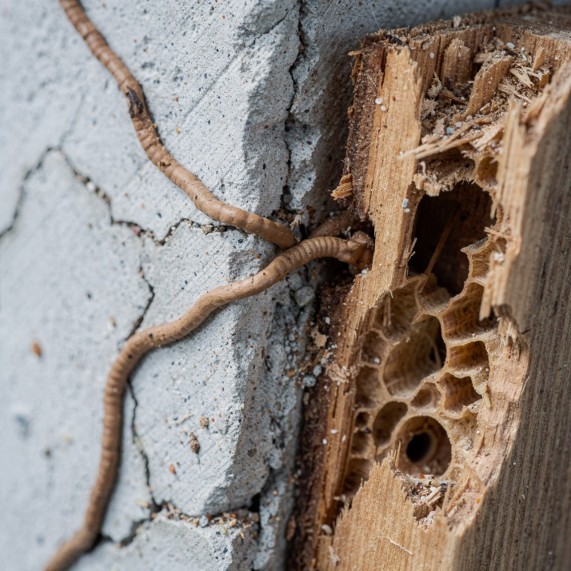
Mud Tubes Along Walls or Foundations
Pencil-sized tunnels of mud running along walls, foundations, or other surfaces are a telltale sign of subterranean termite activity.
Wood That Sounds Hollow When Tapped
Termites eat wood from the inside out, leaving a hollow shell that produces a distinctive hollow sound when tapped.
Discarded Wings Near Windows or Doors
Swarmers shed their wings after finding a new nesting site—piles of discarded wings near entry points indicate a nearby colony.
Small Cracks or Damage in Wooden Structures
Unexplained cracks, blistering, or damage in wooden structures can indicate termite activity beneath the surface.
If you notice any of these signs, it’s important to take action promptly.
📞 Protect Your Home with Professional Termite Treatment
Subterranean termites can cause serious damage if left untreated, and because they work behind the scenes, early action is essential.
At EZ Pest Control & Services, we provide professional termite treatment solutions designed for South Florida conditions. Our approach focuses on thorough application, attention to detail, and long-term protection.
If you suspect termite activity—or simply want to protect your home—our team is here to help.
Professional termite treatment in Broward County. See our real trench process and how we protect homes from subterranean termites.