
 Skip to content
Services / Rodent Control
Scratching in the attic or droppings in the garage usually mean rodents have moved in. We inspect your home for free, find how they are getting in, and give you a written plan before any work starts.
Rats and mice are more than a nuisance. In South Florida’s warm climate they stay active all year, and once they settle in, the damage and their numbers both grow.
Rodents gnaw constantly. Chewed electrical wiring, air ducts, insulation and stored belongings are common, and damaged wiring is a fire risk.
Droppings and urine are left wherever rodents travel: in the attic, behind appliances, in cabinets and in the pantry.
A pair of rodents can turn into a large population within a few months. The earlier they are dealt with, the simpler the job.
Noises in the attic, ceiling or walls, mostly at night when rats and mice are active.
Small dark pellets along walls, in cabinets, in the garage or in the attic.
Chewed wires, wood, food packaging or fruit. Rodents gnaw constantly to keep their teeth short.
Dark smudges along walls, beams or pipes where rodents travel the same path again and again.
You don’t need to know which one you have. Our technician identifies the rodent, where it is active and how it is getting in.
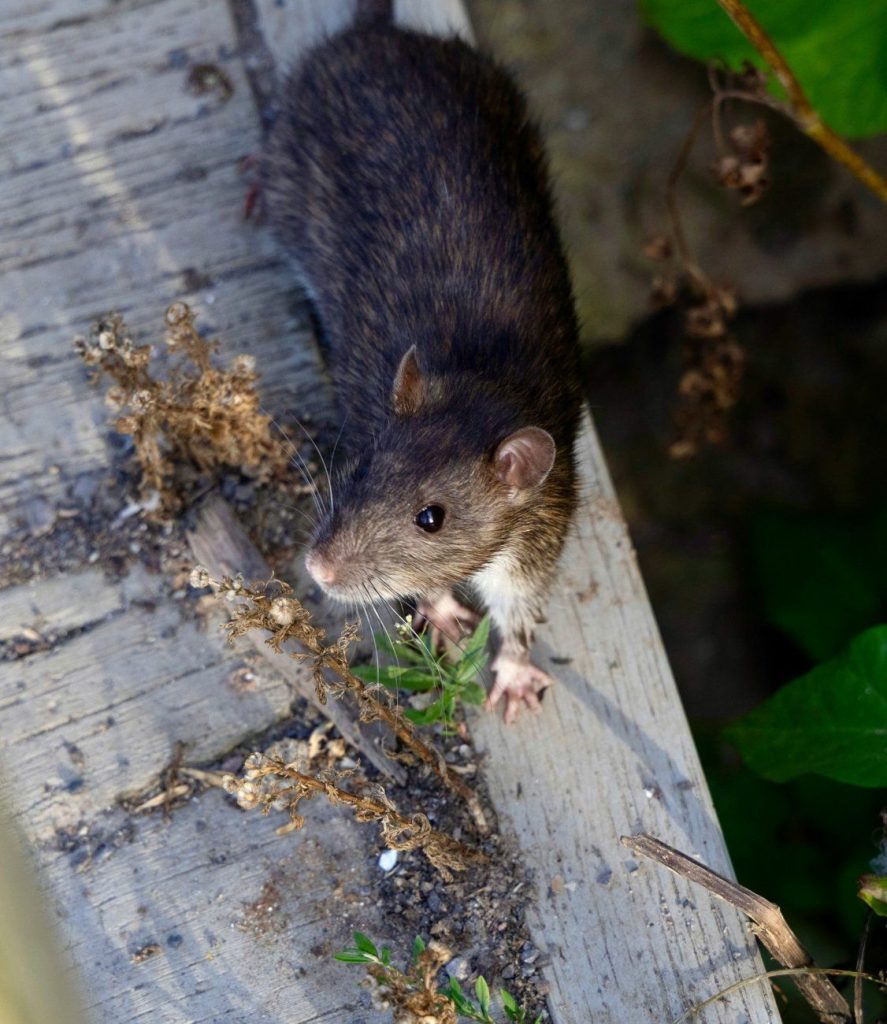
Slender and agile. Roof rats climb trees, fences and utility lines to reach the roof, then nest up high.
Larger and heavier. Norway rats stay low and dig burrows along foundations and under slabs.
Small enough to slip through a gap the size of a dime. Mice nest close to food and multiply quickly.
Every rat or mouse control job starts with a free inspection and a written quote. We find where the rodents are active and how they are entering, then recommend what fits your home.
Our technician inspects your home inside and out, looking for droppings, gnaw marks, grease marks and the gaps rodents use to get in. By the end we know which rodent you have, where it is active and how it is entering.
You get a written quote that explains what we found and what we recommend. No work starts until you approve it.
Our technicians set traps in the attic, and use sticky traps inside the house only in the areas where activity has been identified. They come back every 3 to 4 days to check them.
We seal the small gaps and openings found during the inspection, so the same entry points can’t be used again. If an entry point needs a larger repair, we show you where it is and you choose who fixes it.
Our technicians place bait stations around the outside perimeter of your home only, to help keep the rodent population down. Every station is locked and tamper-resistant.
A few habits make your home much less inviting. If rodents are already inside, though, prevention alone will not remove them.
Seal openings around pipes, vents, doors and the garage. A mouse needs a gap only the size of a dime.
That includes pet food and bird seed, which are favorite targets.
Roof rats use branches and utility lines as a bridge to your attic.
Use lids that fit tightly and do not leave bags outside overnight.
Mango, citrus and avocado on the ground feed rats night after night.
Boxes and stored items in the garage or attic give rodents places to nest.
Have a different question? Call our office in Davie, Monday to Friday, 8am to 5pm.
Nothing. The inspection is free, and you get a written quote before any work starts.
Roof rats, Norway rats and mice.
Usually through small gaps: around pipes and vents, along the roof line, under garage doors. A mouse needs an opening about the size of a dime, and a rat about the size of a quarter.
Food, water and shelter. Pet food, bird seed, fallen fruit, open trash bins and cluttered storage areas all draw them in, and small gaps around pipes, vents and the roof line let them inside.
Yes, we do minor exclusion work, which means sealing the small gaps and openings we find. If an entry point needs a larger repair, we show you where it is and you choose who fixes it.
Make sure our technician can reach the attic access, the garage and the outside of your home, and tell us where you have seen or heard activity.
Bait stations are placed only around the outside perimeter of your home, and they are locked and tamper-resistant. Traps are set in the attic, and sticky traps are used inside the house only in the areas where activity has been identified.
Our technicians come back every 3 to 4 days to check the traps.
It depends on how many rodents there are and how they are getting in. Our technician will explain what to expect for your home.
Across Miami-Dade, Broward, Palm Beach and St. Lucie counties, including Miami, Fort Lauderdale, Davie, Hollywood, Pembroke Pines, Boca Raton, West Palm Beach and Port St. Lucie. Call us or use the ZIP checker on the homepage to confirm your address.
The inspection is free, and you get a written quote before any work starts.
* Required fields