
How to Prevent Pantry Pests: A Complete Guide to Avoiding Weevils and Food Moths
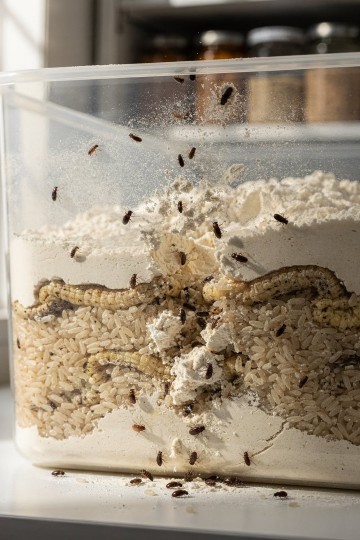
Few things are more frustrating than opening a bag of flour, pouring a bowl of cereal, or reaching for rice only to discover tiny insects, silky webbing, or small moths inside your pantry. Pantry pests may not pose the same immediate concerns as termites or rodents, but they can quickly contaminate stored food, create unnecessary waste, and spread throughout your kitchen before you even realize there’s a problem.
One of the biggest misconceptions homeowners have is believing that pantry pests appear because a home is dirty. In reality, these insects often enter the house inside packaged food purchased from grocery stores. Eggs or larvae can already be present in products such as rice, flour, pasta, cereals, dried fruit, nuts, spices, or pet food long before they ever make it onto your pantry shelves.
Once inside, the insects develop, reproduce, and spread to nearby food products if the conditions are favorable.
Why Prevention Matters in Florida
Florida’s warm temperatures and high humidity make proper food storage even more important. While pantry pests can become a problem anywhere, homes in South Florida provide an environment where these insects can develop quickly if food is left in vulnerable packaging or storage areas are not routinely inspected. Fortunately, preventing an infestation is much easier—and far less expensive—than replacing an entire pantry full of contaminated food.
Understanding how pantry pests live is the first step toward keeping them out of your home. These insects are specialists in finding dry, shelf-stable foods and can often chew through cardboard, thin plastic bags, and paper packaging. Many homeowners don’t notice an infestation until adult moths begin flying around the kitchen or tiny beetles start appearing inside food containers.
The good news is that a few simple habits can dramatically reduce the likelihood of pantry pests becoming established. Proper storage, regular pantry inspections, careful grocery shopping, and good sanitation practices all work together to create an environment that is much less attractive to these insects.
In this guide, you’ll learn what pantry pests are, how they get into your home, the warning signs of an infestation, the foods they target most often, and the best ways to prevent weevils, food moths, and other stored-product insects from taking over your kitchen.

What Are Pantry Pests?
Pantry pests are a group of insects that infest dry, stored food products found in kitchens, pantries, utility rooms, and other food storage areas. Unlike pests that invade homes in search of water or shelter, these insects are specifically attracted to packaged foods and complete much or all of their life cycle inside those products.
Their primary goal is simple: find a reliable food source where they can feed, reproduce, and allow the next generation to develop. Unfortunately for homeowners, many of the foods people keep stocked for weeks or months provide exactly the conditions these insects need.
A pantry infestation often begins with just a few nearly invisible eggs deposited inside a package of food before it ever reaches your home. As the eggs hatch, the larvae begin feeding from within the product, remaining hidden until they mature into adults. By the time flying moths or crawling beetles become visible, the infestation has frequently spread to several nearby food items.
Although pantry pests contaminate food with insects, eggs, larvae, webbing, shed skins, and waste, they generally do not bite people or damage the structure of a home. Their impact is largely economic and sanitary, forcing homeowners to discard contaminated food and thoroughly clean storage areas before the infestation can be eliminated.
Understanding which insects commonly invade pantries makes it much easier to recognize problems early and take preventive action before they become widespread.
What Makes an Insect a Pantry Pest?
Not every insect found in a kitchen qualifies as a pantry pest. Ants, cockroaches, and flies may search for food around sinks or countertops, but pantry pests are different because they specifically target stored dry goods.
These insects have evolved to survive on products with low moisture content, allowing them to thrive in foods that can remain on pantry shelves for months. Common targets include grains, cereals, flour, rice, pasta, beans, dried fruit, nuts, seeds, baking ingredients, spices, chocolate, powdered mixes, birdseed, and even dry pet food.
Many pantry pests are capable of reproducing entirely inside a single food package. Some species lay eggs directly on the food itself, while others chew through paper, cardboard, or thin plastic packaging to reach the contents. As larvae feed, they continue developing unnoticed until they emerge as adults capable of spreading to additional food sources.
Because these insects spend much of their lives hidden inside food products, homeowners often discover an infestation long after it has begun.
The Most Common Pantry Pests Found in Homes
Several different insects are responsible for pantry infestations, but a handful of species account for the vast majority of problems seen in residential kitchens.
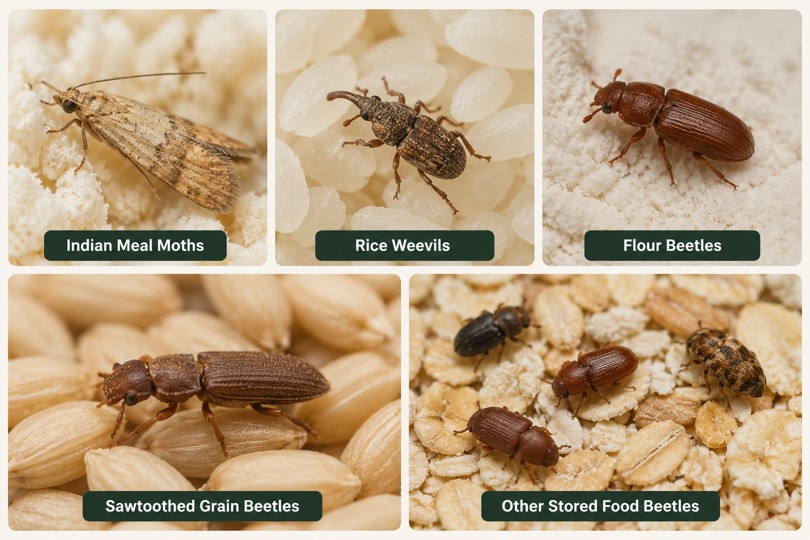
Indian Meal Moths
Indian meal moths are among the most common pantry pests found in homes throughout the United States. Adult moths are relatively small and often noticed flying around kitchens, especially during the evening.
The adults themselves do not consume stored food. Instead, females lay eggs on food products, and the newly hatched larvae are responsible for the damage. As they feed, the larvae produce fine silk webbing that can bind food particles together and leave behind an unmistakable sign of infestation.
Foods commonly attacked include cereal, rice, flour, dried fruit, nuts, grains, pasta, baking mixes, chocolate, spices, and pet food.
Rice Weevils
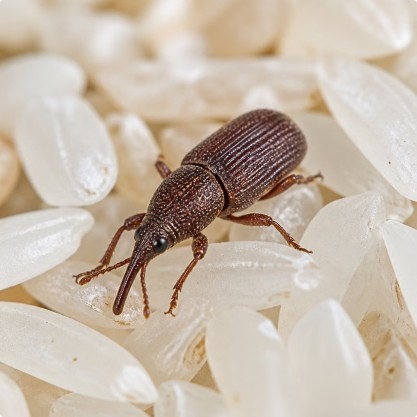
Rice weevils are tiny beetles recognized by their elongated snouts. Although their name suggests they only infest rice, they readily attack many types of whole grains, seeds, corn, pasta, and similar products.
Unlike some pantry pests that remain on the surface of food, rice weevils often develop inside individual grain kernels, making early infestations especially difficult to detect. Adults eventually emerge through small exit holes, leaving damaged kernels behind.
Flour Beetles
Red flour beetles and confused flour beetles are another common group of pantry pests. These reddish-brown insects feed primarily on processed grain products such as flour, cereal, cake mixes, cornmeal, pasta, crackers, and baking ingredients.
Heavy infestations can alter the odor and quality of food products, making them unsuitable for consumption even if only a small number of insects are visible.
Sawtoothed Grain Beetles
Named for the tiny saw-like projections along the sides of their thorax, sawtoothed grain beetles are small, flattened insects capable of entering tiny openings in food packaging.
They commonly infest cereals, dried fruit, seeds, nuts, grains, baking products, and processed foods. Because of their flattened bodies, they can easily hide in narrow cracks around pantry shelves while searching for additional food sources.
Other Stored Food Beetles
Depending on the product and local conditions, homeowners may also encounter warehouse beetles, cigarette beetles, drugstore beetles, merchant grain beetles, and several other stored-product insects.
Although each species has slightly different preferences, their behavior is similar: locating dry food products, reproducing inside them, and contaminating anything they infest.
Which Foods Attract Pantry Pests?
Pantry pests are opportunistic feeders, but they strongly prefer dry foods that remain undisturbed for extended periods. Products stored for months without being used provide an ideal environment for insects to reproduce unnoticed.
Some of the most commonly infested foods include:
- Rice and whole grains
- Flour and baking mixes
- Breakfast cereals
- Pasta and noodles
- Oats
- Crackers
- Cornmeal
- Dried beans
- Nuts and seeds
- Dried fruit
- Spices
- Chocolate
- Birdseed
- Dry pet food
Many homeowners assume unopened packages are safe, but that isn’t always the case. Eggs may already be present inside factory-sealed products, or insects may chew through cardboard boxes and thin plastic bags after the food has been stored at home.
For this reason, proper food storage plays one of the most important roles in preventing pantry pest infestations before they have the opportunity to spread.

How Do Pantry Pests Get Into Your Home?
One of the most surprising facts about pantry pests is that they usually don’t invade your home from outside the way ants, cockroaches, or rodents do. In many cases, these insects arrive hidden inside the food you purchase. A package can appear perfectly sealed on the grocery store shelf while already containing microscopic eggs or tiny larvae that are impossible to see with the naked eye.
Once those products are brought into your home, the insects continue developing under the right conditions. Warm temperatures, low disturbance, and a steady food source allow the infestation to grow until adult insects emerge and spread to nearby packages.
Because the infestation often begins long before homeowners notice any warning signs, understanding how pantry pests enter and spread is one of the most effective ways to prevent future problems.
They Usually Come Home with Your Groceries
Unlike many household pests that search for entry points around windows or doors, pantry pests often hitchhike into homes inside commercially packaged foods. Infestations can occur at various stages of the supply chain, including food processing facilities, warehouses, transportation vehicles, distribution centers, grocery stores, or bulk food bins.
The insects themselves aren’t always present when you purchase the product. More commonly, the package contains tiny eggs that later hatch after the food has been stored in your pantry for several weeks.
Products that remain on store shelves for extended periods are naturally at greater risk because insects have more time to complete part of their life cycle before the food is sold.
This is why homeowners occasionally discover pantry pests shortly after purchasing a brand-new bag of rice or flour. The problem didn’t necessarily begin inside the home—it simply became noticeable there.
How Pantry Pests Spread Throughout the Pantry
Once pantry pests become established inside a single food product, they rarely stay there for long.
Adult female insects lay eggs on or near suitable food sources, allowing newly hatched larvae immediate access to food. As populations grow, adults begin searching for additional products nearby.
Many species can chew through:
- Cardboard boxes
- Thin plastic bags
- Paper packaging
- Wax-coated containers
- Poorly sealed food bags
Others simply exploit small openings that already exist in the packaging.
Indian meal moth larvae are especially mobile. As they mature, they often crawl away from the original food source to pupate in cracks, corners, shelf supports, or even ceilings near the pantry. Homeowners sometimes notice moths flying around the kitchen without realizing the actual infestation is hidden inside a forgotten bag of flour several shelves away.
Beetles can also migrate between packages, especially when food is stored close together. Over time, what started as a single contaminated product can spread across multiple shelves if not detected early.
Signs You May Have a Pantry Pest Infestation
Because pantry pests spend much of their lives hidden inside stored food, infestations often go unnoticed until populations have grown significantly. Learning to recognize the earliest warning signs can help prevent extensive food contamination and reduce the amount of food that must be discarded.
Many homeowners first notice adult insects rather than the food where the infestation actually began. Unfortunately, by that point the insects have often spread beyond the original package.
Here are some of the most common indicators that pantry pests may be present.
Small Moths Flying Around the Kitchen
One of the earliest and most recognizable signs is seeing small moths flying around the kitchen, pantry, or nearby rooms.
Adult Indian meal moths are attracted to light and are often noticed in the evening around windows, ceilings, or light fixtures. While the adults don't feed on stored food, their presence usually indicates that larvae have already developed somewhere inside your pantry.
Even spotting just one or two moths should prompt a careful inspection of all stored dry foods.
Tiny Beetles Crawling Inside Food Packages
Small brown or reddish beetles crawling inside bags of rice, flour, pasta, cereal, or pet food are another obvious sign of infestation.
Weevils and flour beetles are often discovered only after food is poured into a bowl or measuring cup. Because some species develop inside individual grain kernels, early infestations can remain hidden until adult beetles emerge.
If you notice live insects in one package, inspect every nearby dry food item—not just the product where they were first found.
Webbing Inside Food Packages
Silky webbing is one of the clearest signs of Indian meal moth larvae.
The larvae spin thin strands of silk as they move through food products, creating clumps of cereal, flour, oats, or grains that appear stuck together. These webs may also be found in corners of packaging or attached to pantry shelves.
Unlike ordinary dust or fibers, these silk threads indicate active larval feeding and should never be ignored.
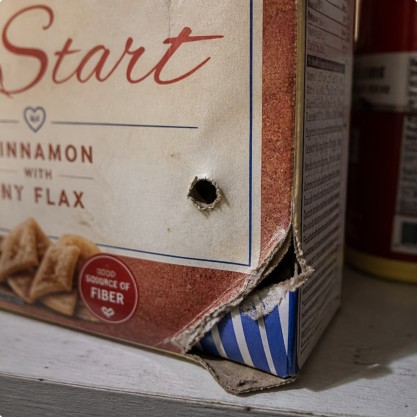
Tiny Holes in Packaging
Small holes in paper, cardboard, or plastic food packaging can indicate insects have either entered or exited the product.
While not every damaged package contains pantry pests, holes combined with insects, webbing, or food debris strongly suggest an infestation.
Always inspect damaged packages before bringing them home from the grocery store.
Clumped, Damaged, or Contaminated Food
Dry food that appears unusually clumped together, contains fine powder, or shows evidence of insect activity should be discarded.
Depending on the species involved, contaminated food may contain:
- Eggs
- Larvae
- Adult insects
- Shed skins
- Silk webbing
- Frass (insect waste)
Although accidentally consuming a pantry pest is unlikely to cause serious illness in most healthy individuals, contaminated food is no longer suitable for consumption and should not be kept.
Why Pantry Pests Can Become a Bigger Problem Than You Think
At first glance, pantry pests may seem like little more than an inconvenience. Finding a few insects inside a bag of rice or cereal may not appear to be a major issue, especially when compared to termites damaging a home’s structure or rodents contaminating living spaces.
However, pantry pests can create problems that extend well beyond a single package of food. Because they reproduce quickly and often remain hidden during the early stages of an infestation, the financial loss and time required to eliminate them can be much greater than many homeowners expect.
Understanding these risks helps explain why early detection and prevention are so important.
Food Contamination
The greatest concern with pantry pests is contamination rather than direct health risks.
As insects feed and develop, they leave behind eggs, larvae, shed skins, silk webbing, droppings, and insect fragments inside food products. Some beetle species can also introduce unpleasant odors or flavors that make food unusable.
Even if only a few insects are visible, the contamination often extends throughout the entire package.
For this reason, food showing any evidence of pantry pests should generally be discarded rather than sorted or cleaned.
Cross-Infestation to Other Food Products
Pantry pests rarely limit themselves to one container.
Once adults emerge, they begin searching for additional food sources nearby. Because many pantry staples are stored close together, insects can rapidly spread from one product to another.
A single overlooked package may eventually contaminate flour, cereal, rice, pasta, baking ingredients, spices, dried fruit, nuts, and even pet food stored on adjacent shelves.
The longer the infestation goes unnoticed, the more difficult it becomes to eliminate completely.
Financial Waste
Replacing an entire pantry can be surprisingly expensive.
Homeowners often discover that dozens of products—including unopened packages—must be discarded to ensure the infestation has been fully removed.
Beyond the cost of replacing food, there is also the time required to inspect every package, clean shelves, vacuum storage areas, and reorganize the pantry before new food can safely be stored.
Preventive measures such as airtight storage containers are usually far less expensive than replacing months' worth of groceries.
Why Throwing Away One Box Isn't Always Enough
A common mistake is assuming that removing the visibly infested product solves the problem.
Unfortunately, pantry pests often spread long before homeowners notice them. Eggs may already exist inside nearby packages, while larvae or pupae may be hidden in shelf corners, cabinet joints, cracks, or small crevices around the pantry.
Without a thorough inspection and cleaning, new adult insects may continue appearing for several weeks, making it seem as though the infestation never went away.
For this reason, successful pantry pest control requires addressing the entire storage area—not just the first package where insects were discovered.

How to Prevent Pantry Pests
Preventing pantry pests is far easier than eliminating an established infestation. While no prevention strategy can guarantee that insects will never enter your home, adopting a few smart storage and housekeeping habits can dramatically reduce the chances of weevils, pantry moths, and other stored-product pests becoming a problem.
The goal is to make your pantry an environment where insects have little opportunity to survive, reproduce, or spread from one food item to another. Most prevention measures are simple, inexpensive, and easy to incorporate into your regular kitchen routine.
Store Dry Foods in Airtight Containers
One of the most effective ways to prevent pantry pests is to transfer susceptible foods from their original packaging into airtight containers as soon as you bring them home.
Many insects can chew through paper bags, cardboard boxes, thin plastic packaging, and even some foil-lined containers. Heavy-duty glass, thick plastic, or metal containers with tight-fitting lids create a physical barrier that significantly reduces the risk of insects reaching the food inside.
Airtight storage also provides another important benefit. If one product happens to contain eggs that were already present when purchased, the insects remain confined to that single container instead of spreading throughout the pantry.
Foods that benefit most from airtight storage include:
- Flour
- Rice
- Pasta
- Breakfast cereals
- Oats
- Sugar
- Baking mixes
- Beans
- Nuts
- Birdseed
- Dry pet food
Choosing clear containers also makes routine inspections much easier because any insect activity can be spotted quickly.


Inspect Food Before Buying It
Prevention starts long before groceries enter your home.
Carefully inspect food packages while shopping for signs of damage such as torn corners, crushed boxes, broken seals, punctures, or small holes. Even minor packaging damage may allow insects to enter products while they sit in warehouses or on store shelves.
Avoid purchasing products that show:
- Torn packaging
- Loose or damaged seals
- Moisture damage
- Food dust leaking from containers
- Visible insects
- Silk webbing
Buying from stores with high product turnover can also reduce the likelihood of purchasing food that has remained in storage for extended periods.
Practice First-In, First-Out (FIFO) Storage
One of the simplest ways to reduce pantry pest problems is by rotating your food inventory.
The “First-In, First-Out” method means older products are used before newer ones. Instead of continually adding new food to the front of the shelf, place recently purchased items behind existing products.
This approach reduces the amount of time dry goods remain in storage, limiting opportunities for insects to complete their life cycles unnoticed.
It’s also helpful to periodically check expiration dates and dispose of products that have been forgotten in the back of the pantry for months—or even years.
Clean Pantry Shelves Regularly
Even small amounts of spilled food can support pantry pests.
Crumbs, flour dust, cereal pieces, birdseed, pet food, and spice residue that accumulate inside cabinets provide insects with a continuous food source, even after infested packages have been removed.
Regular pantry cleaning should include:
- Wiping shelves with warm, soapy water
- Vacuuming corners and shelf joints
- Cleaning cracks and crevices
- Removing food residue from shelf supports
- Discarding outdated products
Cleaning every few months makes it easier to spot potential problems before they become serious infestations.
Never Mix Old and New Food
Many homeowners refill containers before they are completely empty.
Although convenient, this habit can unintentionally spread pantry pests.
If insects or eggs are already present in the remaining food, adding a fresh bag simply gives the infestation an entirely new supply of food.
Instead, completely empty the container, wash and dry it thoroughly, and then refill it with fresh products.
This simple habit significantly reduces the risk of hidden infestations continuing unnoticed.
Store Pet Food Properly
Dry pet food is one of the most commonly overlooked sources of pantry pest infestations.
Because large bags are often stored for weeks or months, they provide an ideal environment for insects such as Indian meal moths, warehouse beetles, and weevils.
Rather than leaving pet food inside the original bag, transfer it to a durable airtight storage container.
Also remember to:
- Sweep spilled kibble regularly.
- Avoid leaving open bags on the floor.
- Keep storage containers tightly closed.
- Clean feeding areas frequently.
Proper pet food storage benefits both pest prevention and food freshness.
Freeze Certain Dry Goods Before Long-Term Storage
Some homeowners choose to freeze certain pantry items for several days after purchasing them.
Freezing can help eliminate eggs or larvae that may already be present inside products such as:
- Flour
- Rice
- Whole grains
- Cornmeal
- Oats
- Nuts
After freezing, allow the food to return to room temperature before placing it into airtight containers. This helps prevent moisture from condensing inside the container.
While freezing isn’t necessary for every household, it can provide additional protection for products intended for long-term storage.
Keep Humidity Under Control
Pantry pests generally thrive more quickly in warm, humid environments.
Although insects can infest dry foods almost anywhere, excess humidity may encourage mold growth and create favorable conditions for faster insect development.
To help keep your pantry less attractive to pests:
- Repair plumbing leaks promptly.
- Improve ventilation if necessary.
- Avoid storing food near moisture sources.
- Keep shelves dry and clean.
- Discard water-damaged food packages.
Maintaining a cool, dry pantry helps preserve food quality while discouraging insect activity.
How to Get Rid of Pantry Pests Safely
Even with excellent prevention habits, pantry pests can occasionally find their way into a home. When they do, quick action is essential to keep the infestation from spreading.
Unlike many household pests, successfully eliminating pantry pests depends far more on inspection, sanitation, and proper food handling than on chemical treatments.
Identify the Source of the Infestation
The first step is locating the original food source.
Carefully inspect every package in the pantry, including products that appear unopened.
Pay close attention to: Rice, Flour, Pasta, Cereal, Oats, Baking mixes, Crackers, Nuts, Seeds, Spices, Dry pet food, Birdseed.
Look for insects, larvae, webbing, damaged kernels, or unusual clumping. Remember that more than one package may already be infested.
Dispose of Contaminated Food
Any food showing signs of infestation should be discarded immediately.
Place contaminated products inside sealed garbage bags before taking them directly to the outdoor trash bin.
Avoid leaving infested food inside indoor garbage cans, as insects may simply crawl back into the kitchen.
Although throwing food away can be frustrating, attempting to salvage contaminated products usually allows the infestation to continue.
Deep Clean the Pantry
Once contaminated food has been removed, thoroughly clean every pantry shelf and cabinet.
A complete cleaning should include: Vacuuming shelves, Cleaning corners, Washing walls and shelves, Wiping shelf supports, Removing loose food particles.
Vacuuming is especially useful because it removes insects, eggs, larvae, and food debris hidden inside small crevices that are difficult to clean by hand. Be sure to empty the vacuum immediately after use.
Monitor for Remaining Activity
After cleaning, continue checking the pantry over the next several weeks.
Occasionally inspect stored foods and watch for: Flying moths, Crawling beetles, New webbing, Fresh packaging damage.
Some homeowners also use pantry pest monitoring traps to determine whether adult insects remain active. Regular inspections help confirm whether the infestation has truly been eliminated before it has another opportunity to spread.
Why Spraying Household Insecticides Near Food Is Not Recommended
When insects appear inside the pantry, many homeowners instinctively reach for an aerosol insecticide.
However, spraying pesticides directly around food storage areas is generally not recommended.
Household insect sprays do little to eliminate insects hidden inside food packages, where most pantry pests spend their lives. More importantly, applying chemicals near food may create unnecessary contamination concerns.
The most effective solution almost always involves:
- Removing infested food.
- Thorough cleaning.
- Proper food storage.
- Ongoing monitoring.
If insects continue appearing despite these efforts, a professional inspection can help identify hidden sources that may have been overlooked.
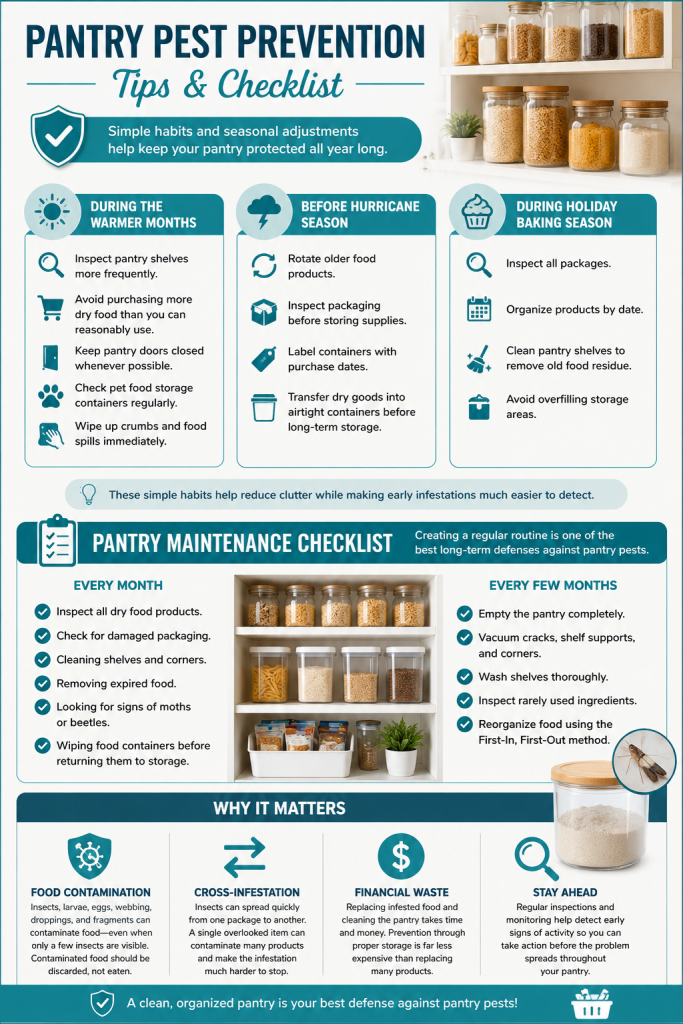
Pantry Pest Prevention Tips for Florida Homes
Homeowners across Florida face unique challenges when it comes to preventing pantry pests. The state’s warm temperatures and high humidity create favorable conditions for many stored-product insects to develop more quickly than they might in cooler climates. While these pests are commonly introduced through grocery items, Florida’s environment can help infestations grow rapidly if they aren’t detected early.
For families living in Miami-Dade and Broward counties, prevention should be viewed as an ongoing routine rather than a one-time cleaning project. A few proactive habits throughout the year can dramatically reduce the likelihood of discovering weevils in a bag of rice or pantry moths flying around the kitchen.
Why Florida's Climate Favors Pantry Pests
Most pantry pests thrive in warm environments where food remains readily available. Although they don’t require excessive moisture to survive, Florida’s combination of heat and humidity can accelerate their life cycles, allowing populations to grow more quickly.
Many homes also keep pantry staples stocked year-round for hurricane preparedness or bulk shopping. While this is a practical approach, it also means foods such as flour, rice, beans, pasta, and pet food often remain in storage for longer periods, increasing the opportunity for hidden eggs to develop into active infestations.
Air-conditioned homes help moderate indoor temperatures, but pantry pests only need a suitable food source and enough time to reproduce. That’s why regular inspections remain important regardless of the season.
Seasonal Prevention Tips
Pantry pest prevention doesn't require major changes throughout the year, but adjusting your routine with the seasons can help keep your kitchen protected.
- Inspect pantry shelves more frequently.
- Avoid purchasing more dry food than you can reasonably use.
- Keep pantry doors closed whenever possible.
- Check pet food storage containers regularly.
- Wipe up crumbs and food spills immediately.
- Rotate older food products.
- Inspect packaging before storing supplies.
- Label containers with purchase dates.
- Transfer dry goods into airtight containers before long-term storage.
- Inspect all packages.
- Organize products by date.
- Clean pantry shelves to remove old food residue.
- Avoid overfilling storage areas.
These simple habits help reduce clutter while making early infestations much easier to detect.
Pantry Maintenance Checklist
Creating a regular pantry maintenance routine is one of the best long-term defenses against pantry pests.
Every Month
- Inspecting all dry food products.
- Checking for damaged packaging.
- Cleaning shelves and corners.
- Removing expired food.
- Looking for signs of moths or beetles.
- Wiping food containers before returning them to storage.
Every Few Months
- Empty the pantry completely.
- Vacuum cracks, shelf supports, and corners.
- Wash shelves thoroughly.
- Inspect rarely used ingredients.
- Reorganize food using the First-In, First-Out method.
This type of routine maintenance not only discourages pantry pests but also helps reduce food waste and keeps the pantry organized.
When Should You Call a Professional Pest Control Company?
Many pantry pest infestations can be resolved by removing contaminated food and thoroughly cleaning the storage area. However, there are situations where insects continue appearing despite careful cleaning and proper food storage.
Persistent infestations often indicate that the original source hasn’t been found or that insects have spread into hidden areas where homeowners rarely look.
Knowing when professional assistance is appropriate can save time, reduce frustration, and prevent repeated food contamination.
Repeated Infestations
If pantry moths or weevils continue appearing weeks after you've cleaned the pantry and replaced contaminated food, there may be additional infested products hidden elsewhere in the home.
Common overlooked sources include:
- Pet food storage bins
- Birdseed
- Decorative dried plants
- Forgotten food in utility rooms
- Bulk food stored in garages
- Emergency food supplies
A professional inspection can help identify these hidden sources before the infestation becomes established again.
Infestations That Keep Returning
Some homeowners find themselves cleaning the pantry multiple times each year.
Recurring infestations may indicate:
- Hidden breeding sites.
- Improper food storage practices.
- Structural areas where insects are pupating.
- Contaminated products repeatedly entering the home.
Rather than treating each outbreak individually, identifying the underlying cause provides a more effective long-term solution.
When the Source Can't Be Found
Sometimes homeowners see adult moths flying around the kitchen without finding any obvious infestation.
Because larvae may leave food products to pupate in cracks, corners, ceiling joints, or cabinet hardware, locating the original source isn't always straightforward.
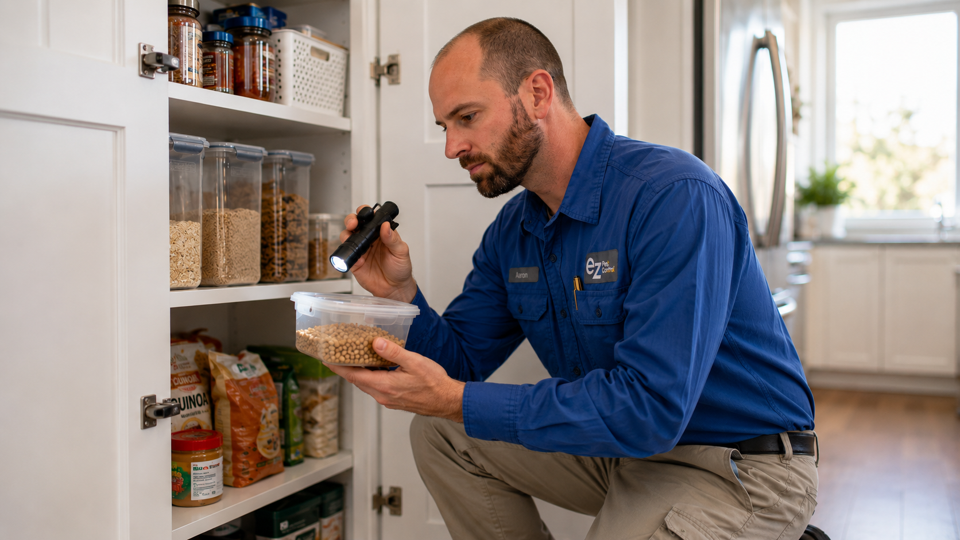
Professional inspections involve carefully evaluating likely harborages and identifying the species involved so that appropriate recommendations can be made.
Professional Inspection vs. DIY Treatments
Do-it-yourself methods work best when infestations are discovered early and confined to one or two food products.
Professional pest management becomes especially valuable when:
- The infestation has spread extensively.
- Multiple pantry cleanouts have failed.
- Several different insect species are present.
- Hidden food sources cannot be identified.
- Homeowners want expert recommendations to prevent future infestations.
An experienced pest professional can distinguish pantry pests from other household insects and recommend the most appropriate corrective measures based on the specific situation.
Why Homeowners Trust EZ Pest Control for Pantry Pest Problems
When pantry pests repeatedly return despite careful cleaning and proper food storage, professional guidance can make all the difference. Identifying the exact insect involved, locating the original source of the infestation, and understanding why it continues to recur are essential steps toward achieving lasting results.
At EZ Pest Control, our team understands that every pantry pest situation is different. Rather than focusing only on the insects that are visible, we perform a careful inspection to determine where the infestation began, how it has spread, and what conditions may be allowing it to continue.
Our approach includes identifying the species involved, evaluating food storage areas, locating potential sources that may be overlooked, and providing practical recommendations that help homeowners reduce the likelihood of future infestations. Whether the problem involves weevils, pantry moths, flour beetles, or other stored-product pests, our goal is to help families protect both their food and their homes.
Proudly serving homeowners throughout Miami-Dade and Broward County, EZ Pest Control provides knowledgeable, reliable pest management solutions tailored to each property’s specific needs. If pantry pests continue appearing despite your best efforts, scheduling a professional inspection can help identify the underlying cause and provide a clear path toward long-term prevention.
Pantry pests are among the most frustrating household insects because they often remain hidden until they’ve already contaminated valuable food products. Fortunately, preventing an infestation is usually much easier than eliminating one.
Simple habits such as inspecting groceries before bringing them home, storing dry goods in airtight containers, cleaning pantry shelves regularly, rotating food supplies, and checking long-term storage items can significantly reduce the risk of weevils, pantry moths, and other stored-product pests establishing themselves in your kitchen.
Equally important is responding quickly when signs of an infestation appear. Removing contaminated food, thoroughly cleaning storage areas, and inspecting nearby products can often stop a small problem before it spreads throughout the pantry.
If pantry pests continue returning despite your preventive efforts, professional assistance may be the most effective next step. A comprehensive inspection can uncover hidden sources of infestation, identify the species involved, and provide customized recommendations that help protect your home for the future.
At EZ Pest Control, we’re committed to helping homeowners throughout Miami-Dade and Broward County maintain healthier, pest-free homes with practical solutions based on careful inspection, proven pest management practices, and personalized service. If you’re dealing with recurring pantry pests or simply want greater peace of mind, our team is ready to help you safeguard your pantry and protect the food your family depends on.
Learn how to prevent pantry pests like weevils and food moths with expert storage, cleaning, and prevention tips. Protect your pantry with EZ Pest Control.
Frequently Asked Questions About Pantry Pests
What are pantry pests?
Pantry pests are insects that infest dry, stored food products such as flour, rice, cereal, pasta, grains, nuts, dried fruit, spices, and pet food. The most common pantry pests include Indian meal moths, rice weevils, flour beetles, and sawtoothed grain beetles.
How do pantry pests get into my home?
Most pantry pests are brought into the home inside packaged food purchased from grocery stores. Eggs or larvae may already be present in products before they reach your pantry, where they later hatch and develop into adults.
Can pantry pests chew through food packaging?
Yes. Many pantry pests can chew through paper, cardboard, and thin plastic packaging. That's why storing dry foods in airtight glass or heavy-duty plastic containers is one of the best ways to prevent infestations.
What foods are most likely to attract pantry pests?
Pantry pests commonly infest flour, rice, cereal, pasta, oats, baking mixes, beans, nuts, seeds, dried fruit, spices, birdseed, and dry pet food. Any dry food stored for long periods may become vulnerable.
How can I tell if I have pantry moths or weevils?
Common signs include small moths flying around the kitchen, tiny beetles inside food packages, silky webbing, damaged packaging, clumped food, or insects crawling inside stored products.
Is food contaminated by pantry pests safe to eat?
No. Although accidentally consuming a pantry pest is unlikely to cause serious illness for most people, contaminated food should be discarded because it may contain insects, eggs, larvae, webbing, shed skins, and insect waste.
How do I prevent pantry pests?
You can reduce the risk of pantry pests by storing dry foods in airtight containers, inspecting groceries before buying them, cleaning pantry shelves regularly, rotating food using the First-In, First-Out (FIFO) method, and properly storing pet food.
Should I spray insecticides inside my pantry?
Spraying insecticides directly around food storage areas is generally not recommended. The most effective solution is to remove infested food, thoroughly clean the pantry, store food properly, and monitor for any remaining insect activity.
Why do pantry pests keep coming back?
Recurring infestations usually mean that hidden infested food remains somewhere in the home or that insects have spread to other stored products. A thorough inspection and proper sanitation are essential to eliminate the source.
When should I call a professional for pantry pests?
If pantry moths, weevils, or other stored-product pests continue returning after you've cleaned your pantry and discarded contaminated food, it's time to schedule a professional inspection. An experienced pest control company can identify hidden sources of the infestation and recommend long-term prevention strategies.