Skip to content

Palmetto Bug vs. German Roach
How to Identify the Type of Cockroach in Your Home — A South Florida Homeowner’s Guide
Not All Cockroaches Are the Same
Few household pests create as much concern among South Florida homeowners as cockroaches. Whether one suddenly appears in the garage, runs across the patio at night, or is spotted inside a kitchen cabinet, the immediate reaction is often the same: finding a way to get rid of it as quickly as possible. However, one of the most common mistakes property owners make is assuming that all cockroaches behave the same way. In reality, different species have very different habits, nesting locations, and infestation patterns.
The Palmetto Bug Myth
In Florida, homeowners frequently use the term “Palmetto Bug” to describe any large cockroach they encounter. Many people assume that every cockroach they see inside their home belongs to the same category — but this assumption can lead to costly mistakes.
Why Identification Matters
A single large cockroach wandering indoors does not indicate the same type of problem as repeatedly finding small cockroaches in a kitchen or bathroom. Misidentifying the species can lead homeowners to underestimate the severity of an infestation or focus their efforts in the wrong areas.
South Florida’s warm temperatures, abundant moisture, and year-round pest activity allow these insects to remain active throughout every season — making proper identification even more critical.
What Is a Palmetto Bug?
For many people living in Florida, the term “Palmetto Bug” is used almost interchangeably with the word “cockroach.” However, the name does not refer to a single species — it is a common regional term used to describe several large cockroach species frequently found throughout the state.
Distinctive Appearance
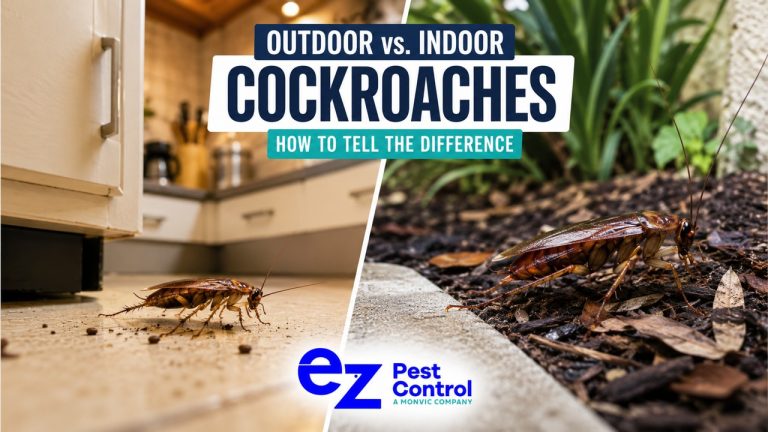
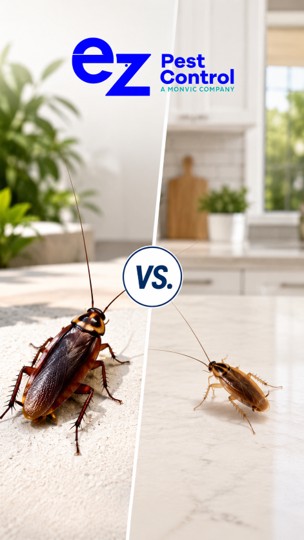
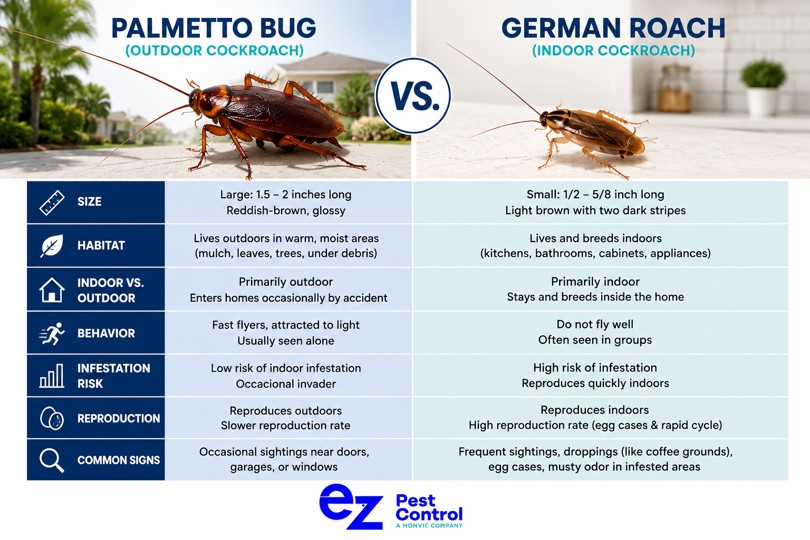
Palmetto Bugs can grow to well over an inch in length with a reddish-brown or dark brown appearance. Their large wings and fast movement make them particularly alarming when encountered indoors. Their size alone frequently causes immediate concern among homeowners.
Primarily Outdoor Insects
Unlike German Roaches, Palmetto Bugs thrive in environments that provide moisture, shelter, and access to organic material. Landscaped areas, mulch beds, piles of leaves, tree cavities, and other damp outdoor locations create ideal conditions for these cockroaches to survive and reproduce.
Accidental Indoor Entry
Because their primary habitat is outdoors, Palmetto Bugs often enter homes accidentally rather than intentionally establishing colonies inside. Heavy rainfall, excessive heat, or changes in environmental conditions can increase the likelihood of these insects seeking temporary shelter inside structures.
Favorable Conditions Signal Risk
Although Palmetto Bugs are generally considered outdoor pests, their presence can signal that conditions around a home are favorable for cockroach activity. Excess moisture, dense vegetation near the foundation, accumulated organic debris, and unsealed entry points can all increase the chances of encounters.
Seeing an occasional large cockroach indoors does not automatically indicate that hundreds of others are hiding within the walls of the home. In many situations, the insect entered from outside and may simply be taking advantage of an available entry point.
What Is a German Roach?
While Palmetto Bugs are often the cockroaches homeowners notice because of their size, German Roaches are typically the species that causes the greatest concern from a pest control perspective. Unlike outdoor cockroaches that occasionally wander indoors, German Roaches live, reproduce, and establish their colonies inside structures.
Physical Characteristics
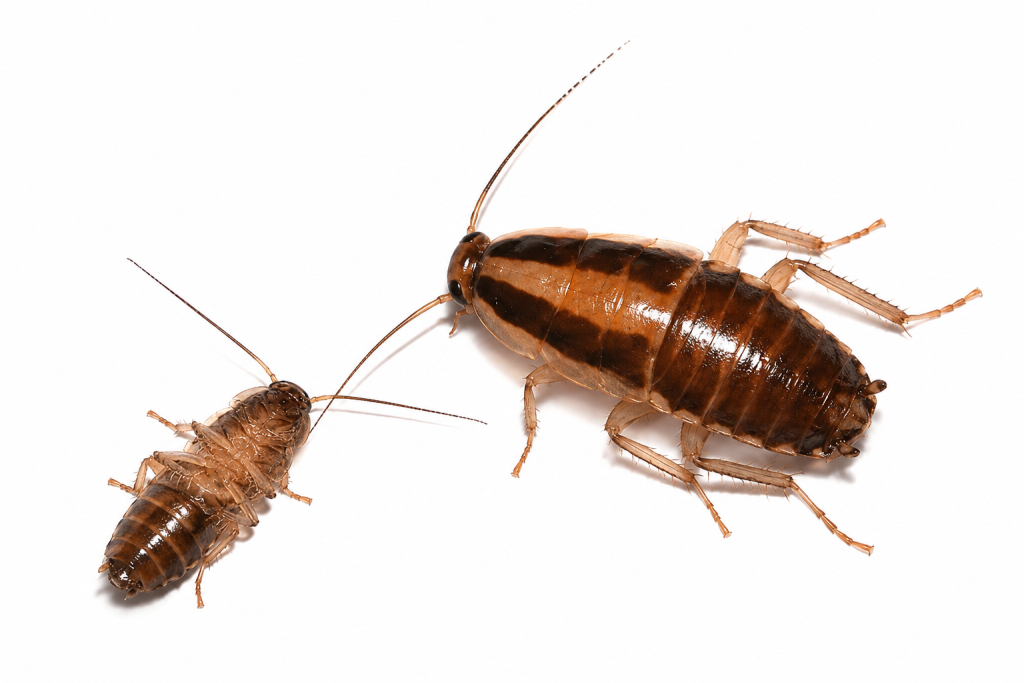
German Roaches are significantly smaller than Palmetto Bugs, usually measuring between half an inch and five-eighths of an inch in length. Their bodies are light brown to tan in color, and one of their most distinctive features is the presence of two dark parallel stripes located behind the head. Because of their smaller size, these cockroaches can easily hide in cracks, crevices, cabinets, and other protected areas where homeowners may not immediately notice them.
How They Enter Your Home
Unlike Palmetto Bugs, which typically originate outdoors, German Roaches are frequently introduced into homes through human activity. They may arrive inside cardboard boxes, grocery bags, moving containers, luggage, secondhand furniture, appliances, or other items brought into the home.
Preferred Hiding Places
- Inside kitchen cabinets and drawers
- Behind refrigerators and beneath dishwashers
- Under sinks and around plumbing fixtures
- Around appliances where warmth and humidity are present
- Utility rooms and bathroom walls
Rapid Reproduction
One of the reasons German Roaches are considered such a challenging pest is their rapid reproductive capacity. A relatively small population can grow quickly under favorable conditions, allowing infestations to spread throughout a home in a surprisingly short period of time.
Frequently seeing small cockroaches during the daytime can indicate that the population has grown large enough to force cockroaches out of their normal hiding places — a serious warning sign that should not be ignored.
Palmetto Bug vs. German Roach: Key Differences
At first glance, many homeowners assume that all cockroaches are essentially the same pest. However, once their behavior, appearance, and infestation patterns are examined more closely, the differences become impossible to ignore. Understanding these distinctions can help homeowners better assess the severity of a problem and determine what type of response may be needed.
| Characteristic | Palmetto Bug | German Roach |
|---|---|---|
| Size | Over 1 inch — large, highly visible | ½ to ⅝ inch — small, easily hidden |
| Color | Reddish-brown to dark brown | Light brown to tan with two dark stripes |
| Primary Habitat | Outdoors — mulch, leaves, tree cavities | Indoors — kitchens, bathrooms, cabinets |
| Entry Method | Accidental — wanders in from outside | Introduced via boxes, bags, appliances |
| Indoor Colonies | Rarely establishes indoor colonies | Establishes and expands colonies indoors |
| Reproduction Rate | Slower, primarily outdoors | Rapid — population grows quickly indoors |
| Sighting Frequency | Occasional, often after rain or heat | Increasingly frequent as colony grows |
| Daytime Activity | Uncommon indoors | Daytime sightings signal large infestation |
Ultimately, the most important difference is that these two cockroaches require different management strategies. Proper identification is therefore critical — not only for understanding what type of cockroach is present, but also for developing an effective plan to reduce future activity and protect the home.
How to Tell Which Cockroach Is in Your Home
For many homeowners, identifying a cockroach species may seem difficult at first. Fortunately, there are several practical clues that can help distinguish between a Palmetto Bug and a German Roach. Paying attention to factors such as size, location, frequency of sightings, and signs of activity can provide valuable insight into what type of cockroach problem may be present.
Assess the Size
Palmetto Bugs are noticeably larger and are often impossible to miss when they appear. German Roaches are significantly smaller and more compact. If the cockroaches being observed are consistently small, light brown, and appear in multiple areas of the home, there is a greater likelihood that German Roaches are involved.
Note the Location
A single large cockroach near an exterior door, garage, patio, or laundry room often aligns with Palmetto Bug behavior. German Roaches are much more likely to be found in kitchens, bathrooms, cabinet interiors, and areas around appliances where food, water, and shelter are readily available.
Track Sighting Frequency
An occasional sighting of a large cockroach does not necessarily indicate an infestation. However, repeatedly seeing small cockroaches over several days or weeks often suggests that a breeding population is present somewhere within the home.
Observe Time of Day
Cockroaches are generally nocturnal. When homeowners begin seeing German Roaches during the day, it can indicate that the population has grown large enough to force individuals out of their normal hiding areas in search of food or shelter.
Look for Physical Evidence
Egg cases, droppings, recurring activity around cabinets, and repeated sightings near moisture sources are all indicators that cockroaches may be actively living within the structure. The presence of ongoing evidence generally suggests a more significant issue than a single isolated sighting.
Because cockroaches are skilled at hiding, visual sightings often represent only a portion of the overall activity taking place. Professional inspections can be valuable when homeowners remain uncertain about what type of cockroach they are dealing with.
Why Correct Identification Matters
Many homeowners assume that any cockroach treatment will solve the problem regardless of the species involved. In reality, the success of any control strategy depends heavily on understanding which type of cockroach is present. Because Palmetto Bugs and German Roaches behave so differently, the methods used to manage them often focus on completely different areas and conditions.
Palmetto Bug Strategy
When a Palmetto Bug enters a home, the source of the problem is frequently located outside the structure. Moisture accumulation, dense vegetation, leaf litter, and accessible entry points may all contribute to increased activity. Treating only the interior without addressing exterior conditions may fail to reduce future encounters.
German Roach Strategy
Since German Roaches establish colonies indoors, successful control requires locating the areas where they are hiding, feeding, and reproducing. Kitchens, bathrooms, cabinets, appliances, and other concealed spaces often require careful inspection and targeted treatment — a far more comprehensive approach.
Avoiding Misidentification
Someone who sees a small cockroach and assumes it is merely an outdoor visitor may unknowingly allow a German Roach infestation to expand. Conversely, a homeowner who encounters a single Palmetto Bug may fear a major infestation when the insect actually entered from outside by accident.
Act Early
Cockroach populations rarely remain static. What begins as a small issue can gradually become more noticeable if favorable conditions persist. Early recognition allows homeowners to take action before activity becomes more widespread — timely intervention is always more effective.
Professional pest inspections can play an important role in this process. Experienced technicians are trained to recognize the signs associated with different cockroach species and understand the behaviors that distinguish one infestation from another. By identifying the species correctly and locating areas of activity, they can recommend solutions that address the actual source of the problem rather than simply treating visible symptoms.
Tips to Help Prevent Cockroach Problems
Regardless of whether homeowners are concerned about Palmetto Bugs or German Roaches, prevention remains one of the most effective ways to reduce the likelihood of future cockroach activity. While no property can be made completely immune to pests, certain habits and maintenance practices can make a home significantly less attractive to cockroaches.
Moisture Control
Cockroaches require water to survive. Leaking pipes, condensation around appliances, clogged drains, and excessive humidity can all create favorable conditions. Addressing these issues promptly can help reduce the resources that cockroaches depend on.
Seal Entry Points
Small gaps around doors, windows, utility penetrations, and foundation openings can provide entry opportunities for outdoor cockroach species. Inspecting and sealing these areas may help reduce the number of insects that find their way indoors.
Proper Food Storage
Food crumbs, spills, pet food, and accessible pantry items can provide a reliable food source for indoor populations. Maintaining clean food preparation areas and storing food in sealed containers can help reduce opportunities for cockroaches to thrive.
Regular Cleaning
Routine cleaning of kitchens, bathrooms, cabinets, and other high-risk areas helps remove many of the conditions that support cockroach survival. Attention should also be given to less visible areas, such as beneath appliances and inside cabinets, where debris may accumulate.
Early Monitoring
Many infestations become more difficult to manage because they remain unnoticed during their early stages. Periodically inspecting areas where cockroaches are commonly found allows homeowners to identify potential issues before they become more serious.
When Should You Call a Professional?
Not every cockroach sighting requires immediate concern, but there are situations where professional assistance may be the most effective course of action. Repeated sightings, evidence of ongoing activity, or uncertainty regarding the species involved are all reasons to consider scheduling an inspection.
Cockroaches Keep Reappearing
If cockroaches continue appearing despite sanitation efforts and preventive measures, it may indicate that the source of the problem has not been identified. Persistent activity after basic prevention steps strongly suggests a professional evaluation is needed.
Small Roaches in Kitchens or Bathrooms
Homeowners who repeatedly encounter small cockroaches in kitchens, bathrooms, or cabinet areas should be aware that these patterns can suggest an active indoor infestation. The sooner these situations are evaluated, the easier they are often to address.
Uncertainty About the Species
Professional inspections can provide clarity when homeowners are unsure whether they are dealing with occasional outdoor invaders or a population that has become established indoors. Identifying the species correctly is the foundation of any effective treatment plan.
Evidence of Ongoing Activity
Egg cases, droppings, musty odors, or recurring sightings near the same locations are all signs that cockroach activity may be more established than a single random encounter. These indicators warrant a thorough professional inspection of the property.
By identifying the species, locating areas of activity, and evaluating conditions around the property, pest management professionals can develop recommendations tailored to the specific situation — addressing the actual source of the problem rather than just visible symptoms.

Protect Your South Florida Home with EZ Pest Control
Understanding the difference between a Palmetto Bug and a German Roach is one of the most important steps homeowners can take when evaluating cockroach activity. Although both insects belong to the cockroach family, they behave very differently — and that difference determines everything about how the problem should be addressed.
Palmetto Bug
Generally an outdoor pest that occasionally enters homes through gaps, doors, and utility openings. Presence signals exterior conditions that need attention — moisture, vegetation, and entry points.
German Roach
A true indoor pest capable of establishing breeding populations and spreading throughout a structure. Requires targeted interior treatment focused on nesting sites, kitchens, and bathrooms.
Recognizing these differences helps homeowners make informed decisions about prevention, monitoring, and treatment. A single large cockroach near an entry point may indicate a very different situation than repeated sightings of small cockroaches in kitchens or bathrooms. By paying attention to appearance, behavior, and location, property owners can better understand what type of problem they may be facing.
For homeowners throughout South Florida, professional identification can provide valuable peace of mind when cockroach activity becomes a concern. EZ Pest Control offers professional inspections and customized treatment recommendations designed to address the specific type of cockroach activity affecting a property.