Skip to content

What Is a WDO Inspection and When Do You Need One?
Wood damage is one of those problems most homeowners do not think about until there is already a visible sign that something is wrong. A soft spot in the floor, bubbling paint near a window, tiny holes in wood trim, or mud tubes along the foundation can all seem minor at first. However, these small clues may point to a bigger issue hidden inside walls, crawl spaces, attics, or structural wood.
That is why a WDO inspection can be so important.
A WDO inspection is a professional inspection that looks for wood-destroying organisms. These organisms include termites, carpenter ants, wood-boring beetles, and wood-decay fungi. Some of them eat wood directly. Others tunnel through it, weaken it, or create the conditions for long-term structural deterioration. In many cases, the damage happens slowly and quietly, which means a home can have a serious problem long before the homeowner notices it.
For many people, the first time they hear about a WDO inspection is during a real estate transaction. A lender, buyer, seller, or real estate agent may request one before a home purchase can move forward. But WDO inspections are not only useful when buying or selling a property. They can also help current homeowners protect their homes, prevent expensive repairs, and identify moisture or pest problems before they become more difficult to manage.
In areas where warm weather, humidity, rain, and moisture are common, wood-destroying organisms can be a real concern. Homes in Florida, including properties across Miami-Dade and nearby areas, often have environmental conditions that can attract termites and other pests. Even homes built with concrete, block, stucco, or masonry may still contain wood framing, roof structures, baseboards, trim, cabinets, doors, and other materials that can be vulnerable to damage.
Understanding what a WDO inspection includes, when you need one, and what the report may reveal can help you make better decisions as a homeowner, buyer, or seller.
What Is a WDO Inspection?
A WDO inspection is a detailed visual inspection performed to identify evidence of organisms that damage wood or create conditions that can lead to wood deterioration. The term WDO stands for Wood-Destroying Organism.
The purpose of the inspection is to determine whether there are visible signs of active infestation, previous infestation, structural damage, wood decay, or conditions that may make the property more vulnerable to future problems. A WDO inspection is especially important because many wood-destroying organisms are difficult to detect without professional training. They often stay hidden inside wood, underground, behind walls, under floors, or in areas that homeowners rarely inspect.
Unlike a general home inspection, which may review many systems in a property, a WDO inspection focuses specifically on organisms and conditions that affect wood. The inspector looks for visible signs of pest activity, damaged wood, moisture problems, fungus, and areas where the home may be at higher risk.
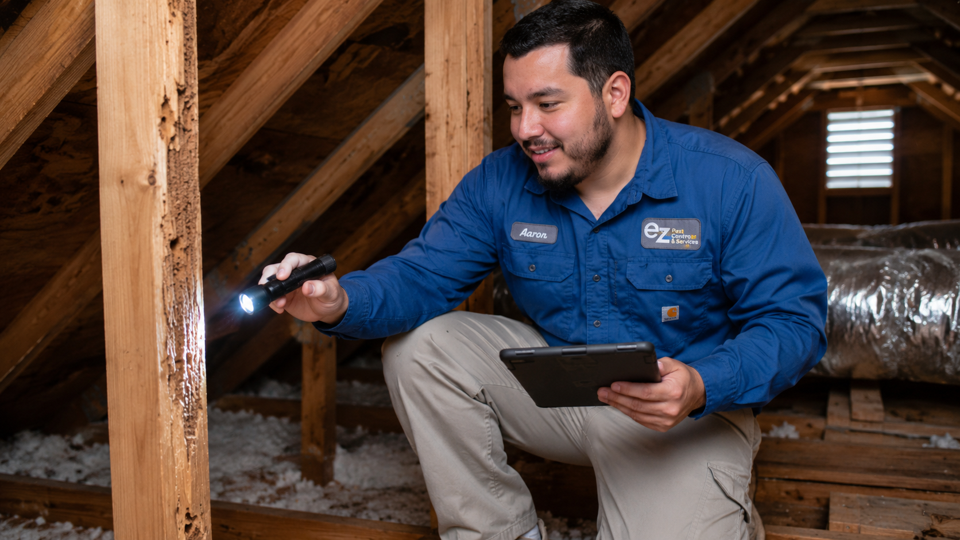
A WDO inspection does not mean that every wall or floor will be opened. In most cases, it is a visual and non-invasive inspection of accessible areas. However, a trained inspector knows where to look, what signs matter, and how to recognize clues that may not be obvious to the average homeowner.
What Does WDO Stand For?
WDO stands for Wood-Destroying Organism. This is a general term used for insects and fungi that can damage wood or weaken the structural components of a building.
Many homeowners immediately think of termites when they hear about wood damage. Termites are one of the most common and destructive wood-destroying insects, but they are not the only concern. A proper WDO inspection looks beyond termites and considers a wider range of organisms and conditions.
Wood-destroying organisms can include pests that consume wood, insects that tunnel through it, and fungi that break down wood fibers when moisture is present. Over time, these organisms can affect framing, floor joists, support beams, roof structures, decks, trim, and other wooden elements of a property.
Because wood damage can affect both safety and property value, identifying these organisms early is a key part of responsible home maintenance.
What Does a WDO Inspection Look For?
A WDO inspection looks for visible evidence of organisms that can damage wood, as well as conditions that make infestations more likely. The exact process can vary depending on the property, but the goal is always the same: to evaluate whether wood-destroying organisms are present, whether they have caused damage, and whether the home has risk factors that should be corrected.
Termites, Carpenter Ants, and Wood-Boring Beetles
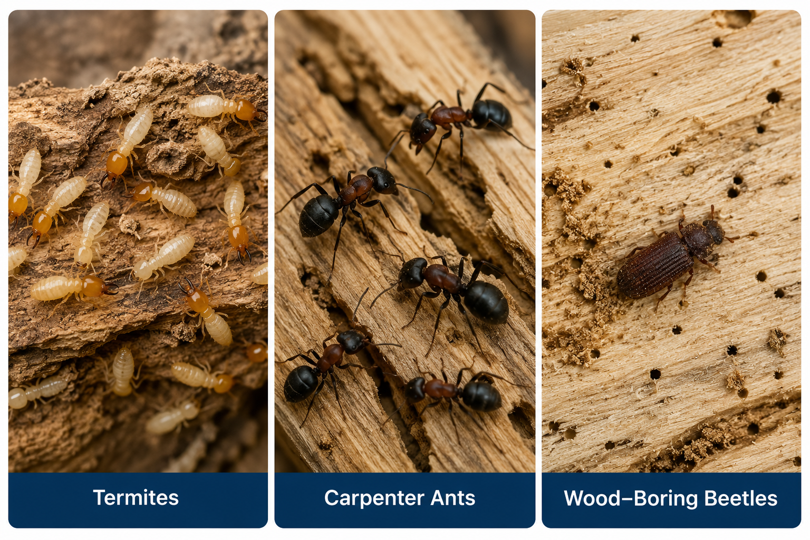
One of the main organisms inspectors look for is termites. In Florida, subterranean termites and drywood termites are both important concerns. Subterranean termites usually live in the soil and may enter a home through cracks, foundation gaps, expansion joints, or areas where wood is close to the ground. They often build mud tubes to travel between the soil and the wood they are feeding on. Drywood termites, on the other hand, can live inside the wood they infest and do not require direct soil contact. They may leave behind small pellets, also known as frass, near windowsills, baseboards, furniture, or attic areas.
A WDO inspection may also look for carpenter ants. Carpenter ants do not eat wood the way termites do, but they excavate wood to create nesting galleries. They are often associated with moisture-damaged or softened wood, which means their presence can point to leaks, poor ventilation, or decay.
Wood-boring beetles are another concern. These insects can leave small exit holes in wood and fine powdery material near the surface. In some cases, beetle larvae may feed inside wood for long periods before adults emerge. Damage from wood-boring beetles can be easy to overlook until the wood has already been weakened.
Wood-Decay Fungi and Conducive Conditions
Wood-decay fungi are also part of the WDO conversation. Fungi develop when moisture levels are high enough to support decay. When wood remains damp, fungal growth can break down wood fibers, causing the material to become soft, brittle, discolored, or structurally compromised. This type of damage is often connected to roof leaks, plumbing leaks, poor crawl space ventilation, drainage issues, or water intrusion around windows and doors.
In addition to organisms themselves, a WDO inspection also looks for conducive conditions. These are conditions that can attract pests or support future infestations. Examples include excess moisture, wood-to-soil contact, cracks or gaps around the foundation, clogged gutters, leaking pipes, poor ventilation, wood debris near the structure, and landscaping that traps moisture against the home.
This is one of the most valuable parts of the inspection. Even if no active infestation is found, identifying risk factors early gives homeowners a chance to correct problems before they lead to damage.
Why Is a WDO Inspection Important?
A WDO inspection is important because wood-destroying organisms can cause damage long before the problem becomes visible. Many infestations begin in hidden or low-visibility areas of the home, such as crawl spaces, wall voids, attics, subfloors, or behind baseboards. By the time a homeowner sees obvious signs, the damage may already require treatment, repairs, or further evaluation.
The inspection gives homeowners, buyers, and sellers a clearer understanding of the property’s condition. It helps answer important questions: Is there active termite activity? Is there previous damage? Are there moisture issues? Are there conditions around the home that could lead to a future infestation? Does the property need treatment or repairs?
A WDO inspection is not only about finding pests. It is also about protecting the home as a long-term investment.
Protects Your Home's Structural Integrity
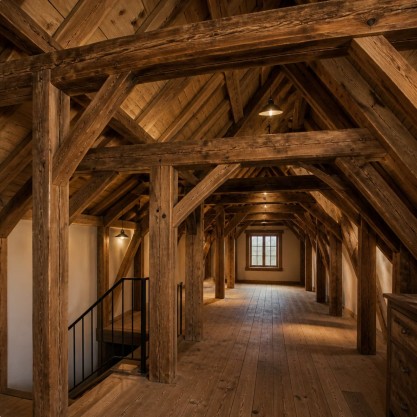
Wood is used in many important parts of a home. Even when a house has concrete block or masonry construction, it may still have wood in the roof structure, attic, interior framing, doors, cabinetry, baseboards, flooring, trim, stairs, or exterior features such as decks and fences.
When wood-destroying organisms attack these areas, they can weaken materials that support or protect the home. Termites may hollow out wood from the inside. Carpenter ants may tunnel through softened wood. Beetles may leave internal galleries and exit holes. Fungi may cause wood to lose strength as it decays.
The problem is that this damage is not always visible on the surface. A piece of wood can appear normal from the outside while being weakened internally. That is why professional inspection is so valuable. The inspector is trained to recognize subtle signs that may indicate deeper damage.
Protecting structural integrity is especially important in areas with frequent moisture, storms, high humidity, and year-round pest pressure. When moisture and pests work together, damage can progress faster and become more expensive to repair.
A WDO inspection helps identify these issues before they become serious structural concerns.
Helps Detect Problems Before They Become Expensive
Wood-destroying organism damage can be costly because it often requires more than pest treatment. If the infestation has affected structural wood, the homeowner may also need repairs. That can involve replacing damaged beams, floor sections, trim, framing, or other materials.
Early detection can make a major difference. A small termite issue found early may be easier to treat than a widespread infestation that has been active for years. A minor moisture problem near a window may be easier to correct than extensive fungal decay inside a wall. A small area of wood-to-soil contact may be simple to adjust before it becomes an entry point for subterranean termites.
A WDO inspection gives homeowners a chance to act while the problem is still manageable.
It can also prevent unnecessary surprises during real estate transactions. A buyer who discovers termite damage late in the closing process may request repairs, renegotiate the price, or delay the sale. A seller who schedules an inspection before listing may have time to address issues before they become negotiation problems. A current homeowner who schedules preventive inspections may avoid larger repairs in the future.
In all of these situations, the value of the inspection is not only in the report itself. The value is in knowing what is happening inside and around the property before the damage becomes worse.
Provides Peace of Mind for Homeowners
One of the greatest benefits of a WDO inspection is the confidence it provides. Whether you have lived in your home for many years or recently purchased a property, knowing that a qualified professional has evaluated it for wood-destroying organisms allows you to make informed decisions about maintenance and repairs.
Many infestations begin without obvious warning signs. Termites can remain active behind walls, beneath flooring, or inside attic framing for months or even years before visible damage appears. Similarly, moisture-related wood decay may develop slowly, affecting structural components long before homeowners notice soft wood or discoloration.
A WDO inspection helps remove the uncertainty. If no evidence of wood-destroying organisms is found, homeowners gain reassurance that the property is in good condition at the time of the inspection. If concerns are identified, they can be addressed before they become larger and more expensive problems.
Instead of wondering whether hidden damage exists, homeowners receive a professional assessment that helps guide future maintenance and pest prevention decisions.
Protects Your Investment and Property Value
For most families, a home is one of their largest financial investments. Keeping that investment protected requires more than maintaining the roof, plumbing, or air conditioning system. Protecting the structural components of the home is equally important.
Wood damage caused by termites, carpenter ants, beetles, or fungi can reduce a property’s value if left untreated. Buyers often become concerned when inspections reveal active infestations or evidence of significant structural deterioration. In some cases, repairs may be necessary before a sale can proceed.
Regular WDO inspections help preserve property value by identifying issues early, allowing homeowners to address concerns before they affect the condition of the home or complicate future real estate transactions.
Even if you have no immediate plans to sell, maintaining a record of professional inspections demonstrates responsible homeownership and helps keep your property in the best possible condition.
When Do You Need a WDO Inspection?
Although many people associate WDO inspections with buying a home, there are several situations where scheduling one is a smart decision. Waiting until visible damage appears often means the problem has already progressed further than expected.
A professional inspection can identify issues early, verify that previous treatments have been effective, or simply provide peace of mind that your home remains protected.

Before Buying or Selling a Home
Before Buying a Home
One of the most common reasons for scheduling a WDO inspection is before purchasing a property.
A home may appear to be in excellent condition during a showing, yet wood-destroying organisms often remain hidden inside walls, beneath flooring, or within structural framing. Cosmetic improvements can make a property look well maintained while concealing underlying pest or moisture issues.
A WDO inspection provides valuable information before closing by identifying:
- Evidence of active infestations.
- Previous wood damage.
- Moisture conditions that increase future risk.
- Structural areas that may require further evaluation
For buyers, this information supports informed decision-making. Depending on the findings, it may also help during negotiations regarding repairs or treatment before the purchase is finalized.
Rather than discovering problems after moving in, buyers have an opportunity to understand the property’s condition before completing one of the largest financial decisions they will ever make.
Before Selling a Property
Sellers can also benefit from obtaining a WDO inspection before listing their home.
Unexpected findings during the buyer’s inspection often create delays, additional negotiations, or requests for repairs. By identifying potential concerns early, sellers have more time to evaluate treatment options, complete necessary repairs if appropriate, and prepare documentation that may help simplify the transaction.
A proactive inspection demonstrates transparency and can increase buyer confidence. It also reduces the likelihood of last-minute surprises that could affect closing timelines.
Even when no problems are found, having a recent inspection can reassure prospective buyers that the property has been professionally evaluated.
After Water Damage or If You Notice Signs of Wood Damage
After Water Damage or Moisture Problems
Water is one of the biggest contributors to conditions that allow wood-destroying organisms to thrive.
Roof leaks, plumbing failures, flooding, poor drainage, overflowing gutters, or excessive humidity can all create environments where fungi develop and insects become more active. Moisture softens wood, making it easier for certain organisms to invade and increasing the risk of long-term deterioration.
If your home has experienced significant water intrusion, scheduling a WDO inspection after repairs are completed is a prudent step. The inspection can determine whether moisture-related conditions have created opportunities for wood-destroying organisms or whether additional corrective measures may be needed.
Even when visible water damage has been repaired, hidden moisture may remain in wall cavities, crawl spaces, or structural framing.
If You Notice Signs of Wood Damage
Homeowners should never ignore changes that could indicate pest activity or wood deterioration.
Some warning signs are obvious, while others are easy to mistake for ordinary wear and tear. A professional inspection is recommended if you notice any of the following:
These symptoms do not always indicate an active infestation, but they should be evaluated promptly to determine the underlying cause.
As Part of Routine Preventive Maintenance
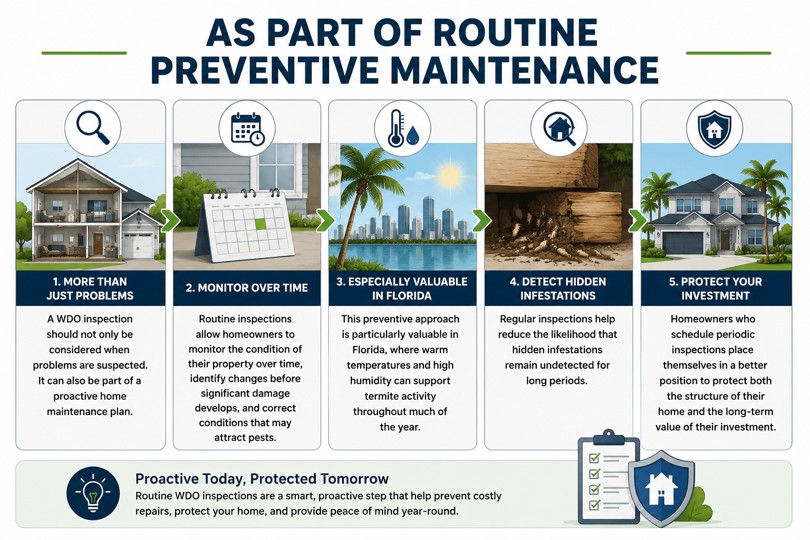
A WDO inspection should not only be considered when problems are suspected. Like roof inspections, HVAC maintenance, or plumbing evaluations, it can also be part of a proactive home maintenance plan.
Routine inspections allow homeowners to monitor the condition of their property over time, identify changes before significant damage develops, and correct conditions that may attract pests.
This preventive approach is particularly valuable in Florida, where warm temperatures and high humidity can support termite activity throughout much of the year. Regular inspections help reduce the likelihood that hidden infestations remain undetected for long periods.
Rather than waiting for visible damage, homeowners who schedule periodic inspections place themselves in a better position to protect both the structure of their home and the long-term value of their investment.
These symptoms do not always indicate an active infestation, but they should be evaluated promptly to determine the underlying cause.
What Happens During a WDO Inspection?
Many homeowners are unsure of what to expect during a WDO inspection. Fortunately, the process is straightforward, professional, and designed to evaluate the property’s accessible areas without causing unnecessary disruption.
The exact inspection process may vary depending on the size, layout, and construction of the home, but most professional inspections follow a systematic approach to ensure that all areas with elevated risk receive careful attention.
The inspector is not simply searching for insects. They are evaluating the entire environment surrounding the home’s wooden components, looking for evidence of activity, previous damage, moisture issues, and conditions that could allow future infestations to develop.
Exterior Inspection
The inspection typically begins outside the home.
The exterior often provides the first clues that wood-destroying organisms may be present. Inspectors carefully examine the foundation, exterior walls, porches, decks, fences, wooden trim, roof overhangs, window frames, and other accessible structural elements.
During this stage, they look for signs such as mud tubes, damaged wood, excessive moisture, wood-to-soil contact, cracks that could serve as entry points, and landscaping conditions that trap moisture against the structure.
They also assess drainage around the property, since standing water and poor grading frequently contribute to termite activity and fungal decay.
The goal of the exterior inspection is to identify both active evidence of wood-destroying organisms and environmental conditions that increase the home’s overall risk.
Interior Inspection, Moisture Assessment & Conducive Conditions
Interior Inspection
After completing the exterior assessment, the inspector moves inside the home to examine accessible areas where wood-destroying organisms are most likely to be found. These typically include garages, utility rooms, attics, crawl spaces, basements where applicable, closets, window frames, door frames, baseboards, and exposed structural wood.
The inspector carefully looks for evidence of insect activity, damaged wood, moisture intrusion, and fungal growth. Depending on the construction of the home, certain structural components may be visible while others remain hidden behind drywall or finished surfaces. Although a WDO inspection is generally non-invasive, trained inspectors know how to recognize subtle warning signs that indicate problems may exist behind finished materials.
Wood that sounds hollow when gently tapped, visible galleries inside exposed lumber, discarded insect wings, termite frass, or areas of discoloration can all provide valuable clues. The inspection also includes observing areas where plumbing lines, HVAC systems, or roof penetrations could introduce moisture into wooden structures.
Because many infestations begin in concealed locations, this careful interior evaluation is one of the most valuable parts of the inspection process.
Moisture Assessment
Moisture is one of the biggest contributors to wood deterioration and termite activity, which is why evaluating moisture conditions is an important component of a WDO inspection.
Wood-destroying fungi cannot survive without sufficient moisture, and many insects are attracted to damp or decaying wood. Even if no active infestation is present, excessive moisture creates favorable conditions that increase the likelihood of future problems.
Inspectors pay close attention to areas around bathrooms, kitchens, laundry rooms, water heaters, air conditioning systems, windows, roofs, and plumbing fixtures where leaks may occur. Crawl spaces and attic areas are also evaluated because poor ventilation can allow humidity to accumulate over time.
Signs of moisture-related concerns may include:
Identifying these conditions early allows homeowners to correct moisture problems before they contribute to structural damage or attract wood-destroying organisms.
Identifying Conducive Conditions
One of the unique aspects of a WDO inspection is that it does not focus solely on finding insects. It also evaluates conditions that make a property more attractive to wood-destroying organisms.
These are commonly referred to as conducive conditions because they create an environment where infestations are more likely to occur.
Examples include:
- Wood siding or framing that comes into direct contact with soil.
- Firewood stacked against the exterior walls of the home.
- Dense vegetation touching the structure.
- Poor grading that allows water to collect near the foundation.
- Leaking gutters or downspouts.
- Cracks around utility penetrations.
- Standing water.
- Inadequate ventilation in crawl spaces or attics.
- Excessive humidity around structural wood.
Addressing these issues is often one of the most effective ways to reduce the long-term risk of infestation. In many cases, correcting moisture and environmental conditions can significantly decrease the likelihood that termites, carpenter ants, or fungi will establish themselves in or around the home.
Rather than waiting for damage to occur, homeowners can take preventive measures that help protect the property for years to come.
Inspection Report and Findings
Inspection Report and Findings
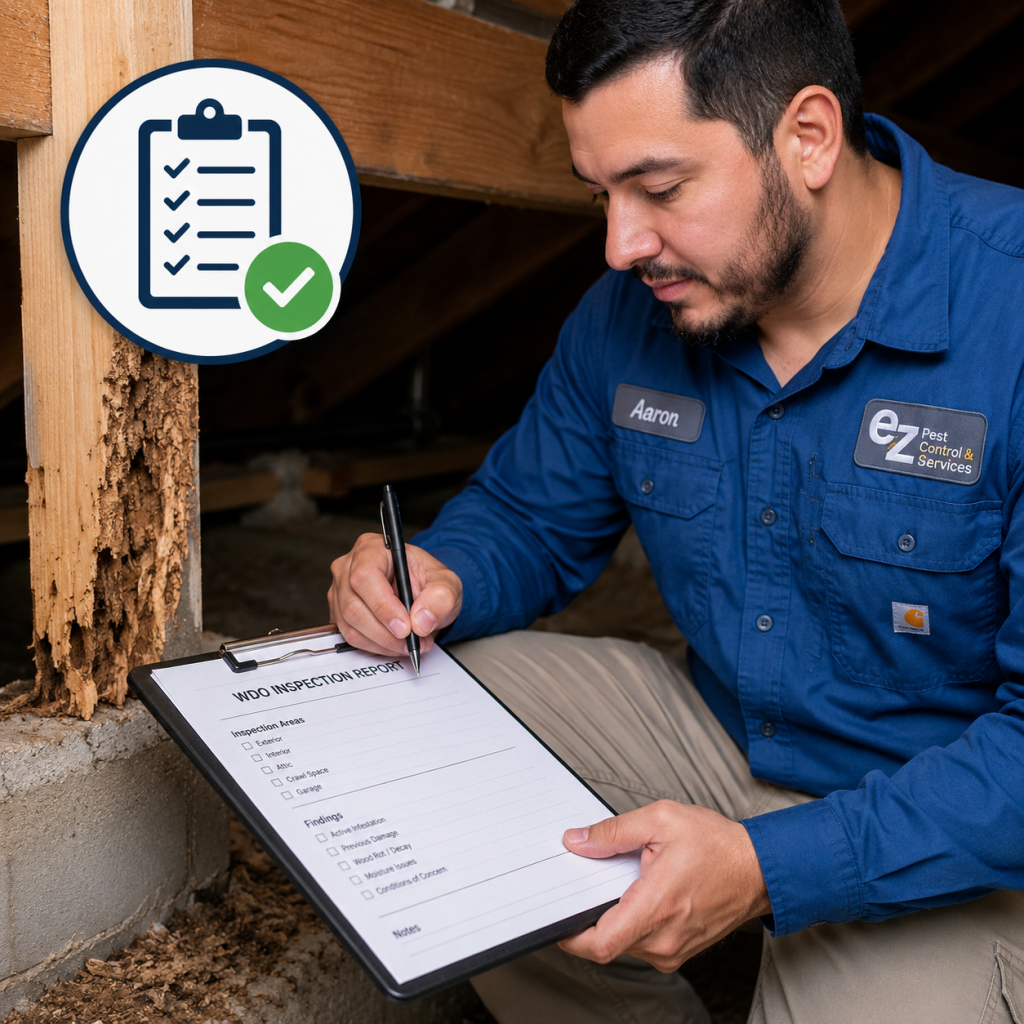
Once the inspection is complete, the inspector prepares a detailed report documenting the findings.
The report typically summarizes the areas inspected, describes any evidence of wood-destroying organisms, notes visible damage, identifies conducive conditions, and provides recommendations for any additional action that may be appropriate.
Depending on the inspection results, the report may include:
- No visible evidence of wood-destroying organisms.
- Evidence of previous infestation.
- Active infestation requiring treatment.
- Wood damage requiring further evaluation or repair.
- Moisture conditions that should be corrected.
- Recommendations for preventive maintenance.
Many reports also include photographs that help homeowners understand exactly where observations were made.
For buyers and sellers, the report becomes an important document during a real estate transaction. For homeowners, it serves as a valuable record of the property’s condition and provides guidance for future maintenance.
What Can a WDO Inspection Reveal?
Many homeowners assume a WDO inspection is simply looking for termites. In reality, it can reveal a much broader range of issues that affect the health and longevity of a home's wooden components.
Some findings require immediate attention, while others simply identify conditions that should be monitored or corrected before they develop into larger problems.
Understanding what a WDO inspection can reveal helps homeowners appreciate its value as both a preventive maintenance tool and an important part of protecting their investment.
Active Infestations
Perhaps the most obvious finding is evidence of an active infestation. Inspectors look for visible signs that termites, carpenter ants, wood-boring beetles, or other wood-destroying organisms are currently present within the property. Depending on the organism involved, signs may include live insects, mud tubes, frass, exit holes, fresh wood damage, swarms or discarded wings, and active galleries inside exposed wood. Identifying an infestation early often allows treatment to begin before structural damage becomes more extensive.
Previous Damage
Not all wood damage indicates an active problem. A home may have experienced termite activity years earlier, received professional treatment, and no longer contain active insects. However, evidence of previous infestations often remains visible. An inspector may identify repaired structural members, old termite galleries, abandoned mud tubes, patched wood, or other signs that indicate past activity. Understanding the difference between active and previous damage is important because the recommended course of action may differ significantly. A previous infestation may require monitoring rather than immediate treatment, while an active infestation generally requires prompt action.
Wood Rot and Decay
Fungal decay is another issue that a WDO inspection can uncover. Unlike insects, wood-decay fungi rely primarily on moisture. When wood remains damp for extended periods, fungal organisms begin breaking down its fibers, causing the material to lose strength over time. Wood affected by decay often appears soft, spongy, cracked, brittle, or discolored. In advanced stages, wood may crumble easily under light pressure. Because fungal decay frequently develops alongside moisture problems, identifying it often leads homeowners to discover roof leaks, plumbing issues, drainage deficiencies, or ventilation problems that might otherwise remain unnoticed.
Moisture Issues
Moisture itself is often one of the most significant findings during a WDO inspection. Even when no insects are present, excessive moisture increases the likelihood that wood-destroying organisms will eventually become established. Inspectors frequently identify issues such as poor drainage around the foundation, roof leaks, plumbing leaks, condensation, high humidity inside crawl spaces, blocked attic ventilation, and water intrusion around windows and doors. Correcting these conditions not only protects the home from decay but also reduces the environmental conditions that attract termites and other pests.
Conditions That Could Lead to Future Infestations
One of the greatest benefits of a professional WDO inspection is that it focuses on prevention as much as detection. An experienced inspector can recognize conditions that may not have caused an infestation yet but significantly increase the property's future risk. Examples include untreated wood touching soil, landscaping that traps moisture against exterior walls, clogged gutters, improperly sloped grading, leaving firewood stacked against the house, excessive vegetation near the foundation, or accumulated wood debris around the property. These findings allow homeowners to make relatively simple corrections before they develop into expensive structural repairs. Preventive maintenance is almost always less costly and less disruptive than repairing damage after an infestation has become established.
WDO Inspection vs. Termite Inspection: What's the Difference?
Because termites are the best-known wood-destroying pests, many homeowners assume a WDO inspection and a termite inspection are exactly the same. While they are closely related, they are not identical.
A termite inspection focuses specifically on identifying evidence of termite activity. The inspector looks for signs such as mud tubes, damaged wood, swarmers, discarded wings, and termite frass. The purpose is to determine whether termites are present and whether treatment may be necessary.
A WDO inspection takes a broader approach.
Instead of looking only for termites, it evaluates multiple types of wood-destroying organisms, including carpenter ants, wood-boring beetles, and wood-decay fungi. It also considers moisture conditions, structural vulnerabilities, and environmental factors that could contribute to future infestations.
Because of its wider scope, a WDO inspection provides a more comprehensive picture of the overall condition of the home’s wooden components.
For homeowners concerned about protecting their investment, this broader evaluation can provide valuable insight beyond the presence or absence of termites alone.
Why Choose EZ Pest Control for Your WDO Inspection?
A WDO inspection is only as valuable as the experience and attention to detail of the professional performing it. Because wood-destroying organisms often remain hidden for long periods, recognizing the subtle signs of activity requires specialized knowledge, careful observation, and a thorough understanding of how these pests behave in South Florida homes.
At EZ Pest Control, our inspectors understand the unique pest pressures that affect properties throughout Miami-Dade County. Florida’s warm climate and year-round humidity create favorable conditions for termites and other wood-destroying organisms, making routine inspections an important part of protecting your home.
Our WDO inspections are designed to provide homeowners, buyers, and sellers with clear, professional evaluations that help identify potential concerns before they become costly structural problems. During every inspection, we carefully examine accessible areas of the property, looking not only for evidence of termites but also for carpenter ants, wood-boring beetles, wood-decay fungi, moisture issues, and conditions that may increase the risk of future infestations.
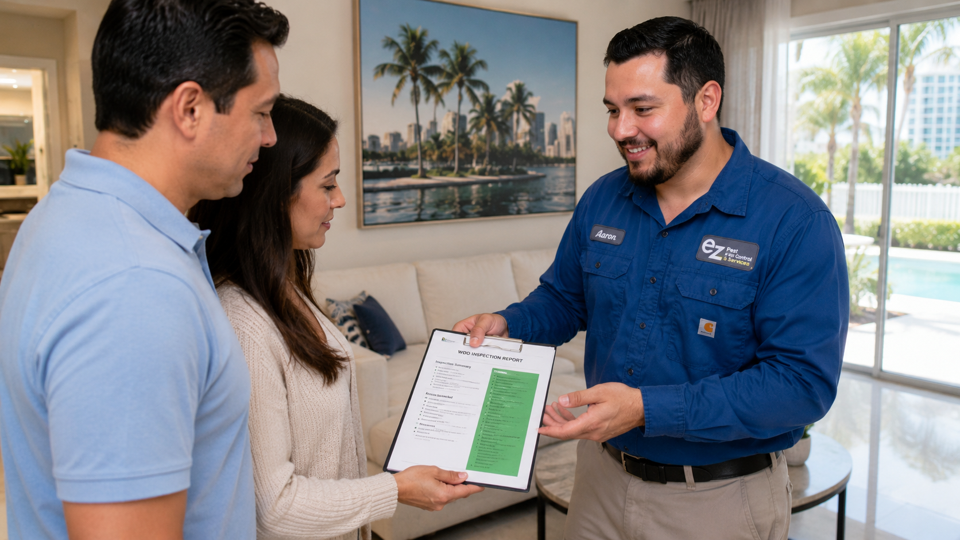
Rather than simply pointing out problems, we take the time to explain our findings in straightforward language so you understand the condition of your property and the options available. If treatment is recommended, our team can help you determine the most appropriate next steps based on your home’s specific needs.
Whether you are preparing to purchase a home, getting ready to sell your property, or simply want greater confidence that your investment is protected, a professional WDO inspection from EZ Pest Control provides valuable information that can help you make informed decisions and avoid unexpected repairs.
Protect Your Home Before Hidden Damage Becomes a Costly Problem
Wood-destroying organisms often work silently, causing damage long before homeowners notice visible warning signs. A professional WDO inspection helps uncover these hidden issues while they are still manageable, giving you the opportunity to protect your home’s structure, preserve its value, and address potential problems before they require major repairs.
Whether you’re buying a new home, preparing to sell your current property, recovering from water damage, or simply taking a proactive approach to home maintenance, scheduling a professional inspection is one of the smartest investments you can make.
If you’re looking for experienced professionals who understand the unique pest challenges found throughout South Florida, EZ Pest Control is here to help. Our team provides thorough WDO inspections, clear reports, and practical recommendations designed to help homeowners protect their properties with confidence.
Learn what a WDO inspection is, what it covers, and when you need one. Discover how it helps protect your home from termites, wood damage, and costly repairs.
Frequently Asked Questions About WDO Inspections
What is a WDO inspection?
A WDO (Wood-Destroying Organism) inspection is a professional inspection that looks for evidence of organisms that can damage wood, including termites, carpenter ants, wood-boring beetles, and wood-decay fungi. The inspection also identifies moisture issues and conditions that could increase the risk of future infestations.
Is a WDO inspection the same as a termite inspection?
No. A termite inspection focuses only on termites, while a WDO inspection has a broader scope. It evaluates multiple wood-destroying organisms as well as environmental conditions, such as excess moisture or wood-to-soil contact, that may lead to future problems.
When should I schedule a WDO inspection?
A WDO inspection is recommended before buying or selling a home, after significant water damage, if you notice signs of wood deterioration or pest activity, or as part of routine preventive home maintenance—especially in areas where termites are common.
What does a WDO inspection include?
The inspection includes a thorough visual examination of accessible interior and exterior areas of the property. Inspectors look for signs of active infestations, previous damage, wood decay, moisture problems, and conditions that could attract wood-destroying organisms.
How long does a WDO inspection take?
Most residential WDO inspections take between one and two hours, depending on the size, layout, and accessibility of the property. Larger homes or properties with multiple structures may require additional time.
What happens if a WDO inspection finds termites?
If active termites are found, the inspector will explain the findings and recommend appropriate treatment options. Addressing the infestation promptly can help prevent additional structural damage and protect your home from further deterioration.
Can a home fail a WDO inspection?
A WDO inspection does not assign a pass or fail grade. Instead, it documents the condition of the property and reports any evidence of wood-destroying organisms, damage, or conducive conditions that should be addressed.
How often should homeowners schedule a WDO inspection?
Homes in regions with year-round termite activity, such as South Florida, can benefit from regular WDO inspections as part of a preventive maintenance plan. Periodic inspections help identify problems early before they become more costly to repair.
Does homeowners insurance cover termite damage?
Most standard homeowners insurance policies do not cover termite damage because it is generally considered preventable through regular maintenance and inspections. It's always a good idea to review your specific policy with your insurance provider.
Why should I choose EZ Pest Control for a WDO inspection?
EZ Pest Control provides thorough WDO inspections performed by experienced professionals who understand the pest challenges common throughout South Florida. Our team carefully evaluates your property, explains the findings clearly, and provides practical recommendations to help protect your home and investment.